
Ivy League 101
Eight universities, eight different academic cultures — and how families can compare programs, cost, fit, and admissions strategy
Written By DCP Blog Content Management Intern Abhi Kandi · on July 31st, 2026 · 43 min read
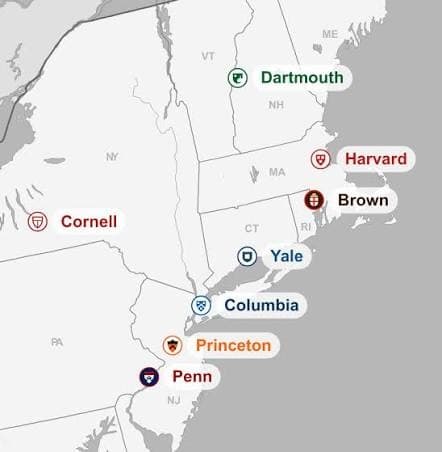
Table of Contents
They are often spoken about as though they are one institution.
The Ivy League.
One name.
One category.
One seemingly impossible goal.
Students say they want to attend “an Ivy.”
Parents ask what it takes to “get into the Ivies.”
College lists sometimes include all eight schools, as though applying to Brown, Columbia, Cornell, Dartmouth, Harvard, the University of Pennsylvania, Princeton, and Yale is one unified strategy.
But it is not.
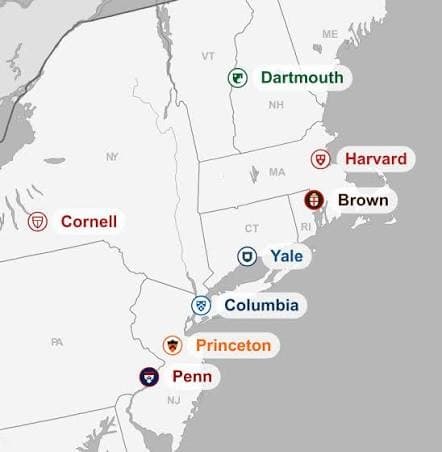
The Ivy League officially includes eight universities:
Brown University,
Columbia University,
Cornell University,
Dartmouth College,
Harvard University,
Princeton University,
the University of Pennsylvania,
and Yale University.
The term originally referred to an athletic conference. Over time, it became shorthand for highly selective universities associated with academic prestige, influential alumni, extensive research, and substantial institutional resources.
But the eight schools are not interchangeable.
Brown’s Open Curriculum is fundamentally different from Columbia’s Core Curriculum.
Cornell’s large, specialized undergraduate colleges create a different experience from Dartmouth’s smaller, close-knit community.
Penn has a distinctly interdisciplinary and preprofessional character.
Princeton places unusual emphasis on undergraduate independent research.
Yale combines a broad liberal arts education with residential colleges.
Harvard offers the scale and resources of a major research university while maintaining a separate undergraduate college.
The important question is therefore not simply:
“Can I get into an Ivy League school?”
It is:
“Which Ivy League school actually fits the way I want to learn, live, contribute, and prepare for my future?”
That is a much more useful question.
And it can lead to a much stronger college list.
Before Comparing the Schools, Understand the Numbers
Ivy League universities publish enormous annual prices.
For the 2026–27 academic year, the estimated undergraduate cost of attendance at several of these institutions approaches or exceeds $100,000 before certain travel, insurance, or personal expenses are added.
But the published price is not necessarily the amount a family will pay.
Every family should distinguish among three numbers:
Tuition is the charge for academic instruction.
Cost of attendance includes tuition, fees, housing, food, books, transportation, and estimated personal expenses.
Net price is the amount remaining after grants and scholarships are applied.
The net price is the number that matters most.
A family should never assume that an Ivy League education is automatically unaffordable because of the published price.
But it should also never assume that the university will provide enough aid simply because the student is talented.
The family must complete the required financial-aid applications.
It must use each college’s net price calculator.
It must examine how the institution treats income, assets, home equity, divorced or separated parents, businesses, farms, and outside scholarships.
And it must compare the actual offers after admission.
Ivy League Aid Is Usually Need-Based, Not Merit-Based
The eight Ivy League universities generally do not award institutional undergraduate scholarships because a student has a high GPA, an exceptional SAT score, athletic ability, or a long list of accomplishments.
Their university-funded undergraduate aid is primarily based on demonstrated financial need.
They also do not award athletic scholarships.
A student may still receive an outside merit scholarship from a corporation, community organization, foundation, employer, or nonprofit program. However, each university has its own policy explaining how outside awards interact with the student’s institutional aid package.
This distinction matters.
A family with little demonstrated financial need should not apply to an Ivy expecting an academic scholarship simply because the student is at the top of the class.
At these schools, academic excellence helps a student compete for admission.
It does not normally produce a university merit discount.
Brown University

Academic freedom for the self-directed student
Location, enrollment, and cost
Brown University is located in Providence, Rhode Island.
Recent university reporting shows approximately 7,900 undergraduate students, about 3,400 graduate students, and roughly 600 medical students. Brown has also described a doctoral and MFA community of approximately 1,700 students. Because universities classify graduate, professional, medical, master’s, and doctoral students differently, these categories should not always be added together as though they were completely separate.
For 2026–27, Brown lists tuition of $74,568. When required fees, housing, food, and estimated personal expenses are included, the first-year cost of attendance is approximately $99,984 before individual travel and health-insurance costs.
What makes Brown’s undergraduate education distinctive
Brown is best known for its Open Curriculum.
Students do not complete a traditional general-education core containing a fixed series of required courses. Instead, they design an academic path around their interests while still completing the requirements of a concentration, Brown’s term for a major.
Brown offers nearly 80 concentrations and also allows qualified students to propose independent concentrations when an existing program does not address their academic goals. The university does not calculate class rank and is known for giving students considerable responsibility over the structure of their education.
This freedom does not mean that Brown is academically unstructured.
It means that the structure comes largely from the student.
A successful Brown student must be able to ask:
What do I want to understand?
Which disciplines will help me understand it?
How will I create depth rather than simply taking unrelated courses?
How will I use academic freedom responsibly?
Particularly strong undergraduate areas
Brown is especially attractive for students interested in combining fields.
A student might connect computer science with visual art.
Another might combine applied mathematics with economics.
Another might study neuroscience while exploring philosophy, public health, or education.
Particularly prominent areas include:
- Computer science and applied mathematics
- Biology, neuroscience, and health-related fields
- Economics and international and public affairs
- Engineering and design
- Literary arts, visual art, and the humanities
- Public health and interdisciplinary social sciences
Brown’s Applied Mathematics–Computer Science concentration, for example, brings computational methods together with mathematical modeling and can prepare students for research, technology, quantitative analysis, or graduate study.

Graduate and professional programs
Brown does not have a law school.
Its most prominent professional program is the Warren Alpert Medical School.
The medical program uses a competency-based curriculum and provides opportunities for early clinical learning, scholarly concentrations, dual degrees, and MD-PhD training. Brown also has major graduate programs in public health, engineering, biomedical sciences, humanities, and social sciences.
Students considering Brown because they eventually want to become physicians should understand an important distinction:
Attending Brown as an undergraduate does not guarantee admission to Brown’s medical school.
The undergraduate institution and medical school have separate admissions processes.
Brown does offer the highly selective Program in Liberal Medical Education, commonly called PLME, through which selected first-year applicants may pursue a combined undergraduate and medical pathway. But it should not be treated as an easier route into medicine. It is one of the university’s most competitive options.
Financial aid and scholarships
Brown states that it meets 100 percent of each admitted undergraduate’s demonstrated financial need. Its Brown Promise policy removes packaged loans from university financial-aid awards, although families may still choose to borrow. Brown’s institutional undergraduate aid is need-based rather than merit-based.
Students seeking aid generally complete the FAFSA when eligible, the CSS Profile, and any requested financial documentation.
Outside scholarships may be used, but families should review Brown’s current policy to determine whether an award reduces the student contribution, work expectation, or another part of the package.
Who is the best fit for Brown?
Brown may be an excellent fit for a student who:
- Is intellectually curious across several subjects
- Wants flexibility rather than a prescribed core
- Can make responsible academic decisions
- Values collaboration and exploration
- Wants to connect the arts, sciences, humanities, or technology
- Is comfortable creating an individual academic identity
Brown may be a weaker fit for a student who wants a highly prescribed curriculum, a traditional undergraduate business school, or a college that will determine most course requirements for them.
Freedom is Brown’s great advantage.
But freedom only works when a student knows how to use it.

Columbia University
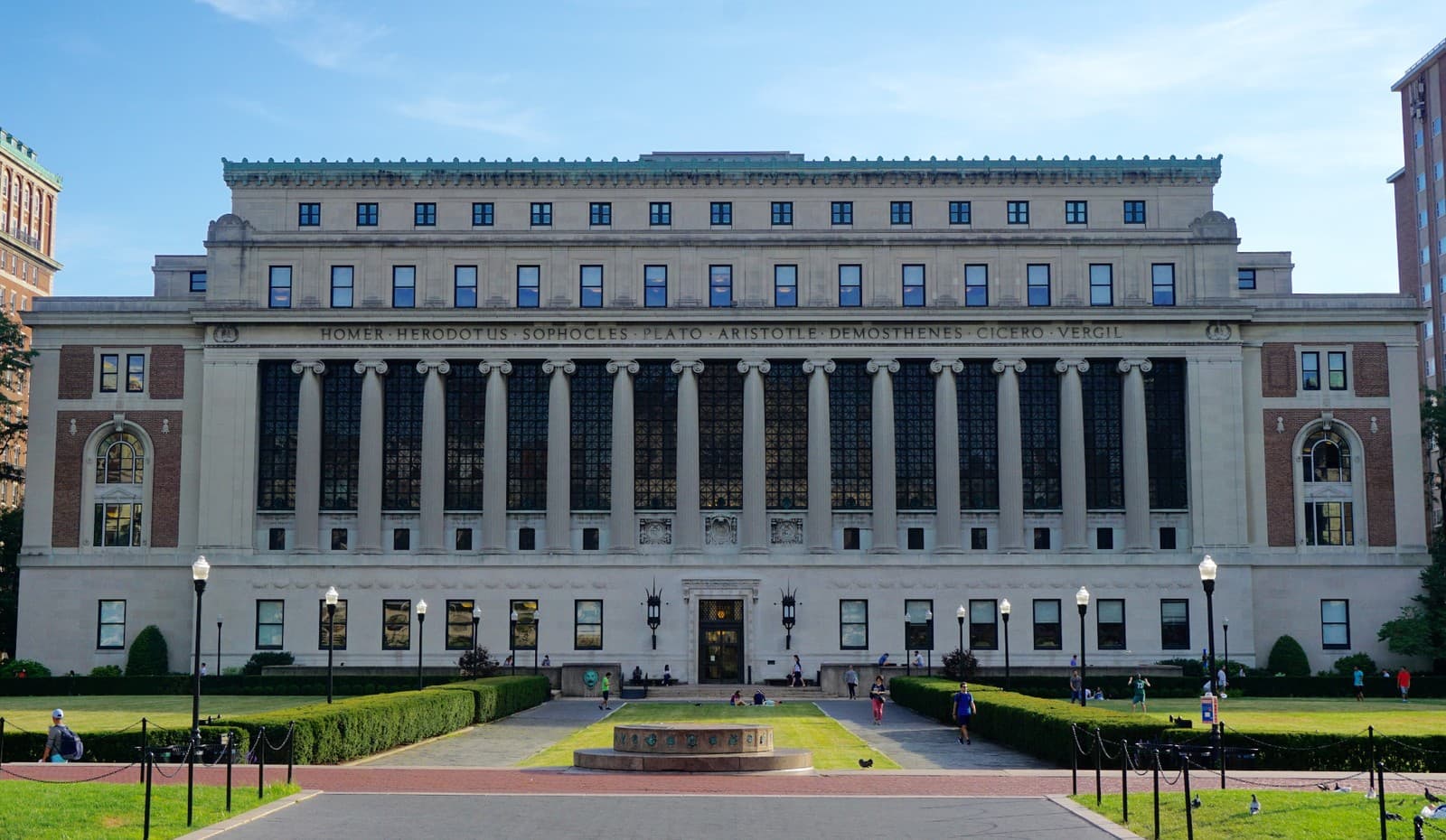
A structured intellectual foundation in the center of New York City
Location, enrollment, and cost
Columbia University is located in the Morningside Heights neighborhood of Manhattan in New York City.
For fall 2025, Columbia reported 35,978 students across the university. Degree-level reporting included approximately 9,489 bachelor’s students, 18,655 master’s students, 3,232 research-doctoral students, and 2,848 professional-doctoral students, along with certificate and non-degree students.
For 2026–27, Columbia’s first-year undergraduate budget includes $72,800 in tuition and a total estimated cost of $99,774 before variable travel and, when applicable, university health insurance.
What makes Columbia’s undergraduate education distinctive
Columbia College is known for the Core Curriculum.
Unlike Brown’s student-designed academic freedom, Columbia requires students to encounter a shared set of texts, questions, artistic works, scientific ideas, and historical debates.
Core components include Literature Humanities, Contemporary Civilization, Art Humanities, Music Humanities, Frontiers of Science, University Writing, and additional requirements in global cultures, language, science, physical education, and other areas.
The Core creates a common academic language.
Students from different majors may discuss the same philosophical argument, novel, musical composition, or political question.
For some students, this becomes the most meaningful part of Columbia.
For others, it can feel restrictive.
A student should not apply merely because Columbia is in New York.
The student should be genuinely interested in the kind of academic conversation the Core creates.
Particularly strong undergraduate areas
Columbia is especially prominent in:
- Economics and political science
- Literature, philosophy, history, and the humanities
- Computer science and engineering
- Mathematics, physics, and data-oriented fields
- Neuroscience and biological sciences
- Sustainable development and environmental studies
- Urban studies and international affairs
Columbia Engineering offers technically rigorous programs while also requiring substantial humanities and nontechnical coursework. This can appeal to students who want engineering education within a broad intellectual environment.
New York City also functions as an extension of the campus.
Students may pursue internships, research, arts opportunities, entrepreneurship, public service, publishing, finance, technology, medicine, law, and policy work throughout the city.
But New York can also make the experience more independent and fast-moving.
It is not the same environment as a secluded residential college town.

Graduate and professional programs
Columbia has an extensive graduate and professional ecosystem.
Its best-known schools include:
- Columbia Law School
- Columbia Business School
- Vagelos College of Physicians and Surgeons
- Graduate School of Journalism
- School of International and Public Affairs
- Fu Foundation School of Engineering and Applied Science
- Mailman School of Public Health
- Graduate School of Arts and Sciences
The medical school offers MD, MD-PhD, dual-degree, biomedical doctoral, and allied-health pathways.
Columbia Law’s three-year JD program combines a first-year legal foundation with upper-level courses, clinics, externships, simulations, policy laboratories, public-service opportunities, and globally oriented study.
Students should remember that Columbia’s undergraduate journalism opportunities are not the same as admission to its graduate journalism school. The famous Graduate School of Journalism primarily serves students after completion of a bachelor’s degree.
Financial aid and scholarships
Columbia College and Columbia Engineering award institutional undergraduate assistance based on financial need rather than academic, athletic, or artistic merit.
Columbia states that it meets 100 percent of demonstrated need for eligible first-year students and does not use loans to meet that calculated need.
For families with typical assets, Columbia reports:
- A $0 expected parent contribution below $66,000 in calculated family income
- Tuition-free attendance for calculated family incomes from $66,000 through $150,000
- Possible assistance for some families earning considerably more, depending on circumstances
These are guidelines, not automatic guarantees. Assets, family structure, and other information can change the calculation.
Domestic applicants seeking aid generally complete the FAFSA, CSS Profile, and supporting documentation. International applicants should pay close attention to Columbia’s separate international financial-aid policies because admission may be need-aware for some applicant groups.
Who is the best fit for Columbia?
Columbia may be a strong fit for a student who:
- Loves reading, discussion, writing, and major intellectual questions
- Wants a shared academic foundation
- Is excited by life in Manhattan
- Values access to internships and cultural institutions
- Can manage independence and an intense urban pace
- Wants both a traditional liberal arts foundation and modern research opportunities
Columbia may be a weaker fit for a student who dislikes required humanities courses, wants a quiet and self-contained campus, or prefers to avoid the pressures and distractions of a major city.
New York is not merely outside Columbia.
It is part of the education.

Cornell University
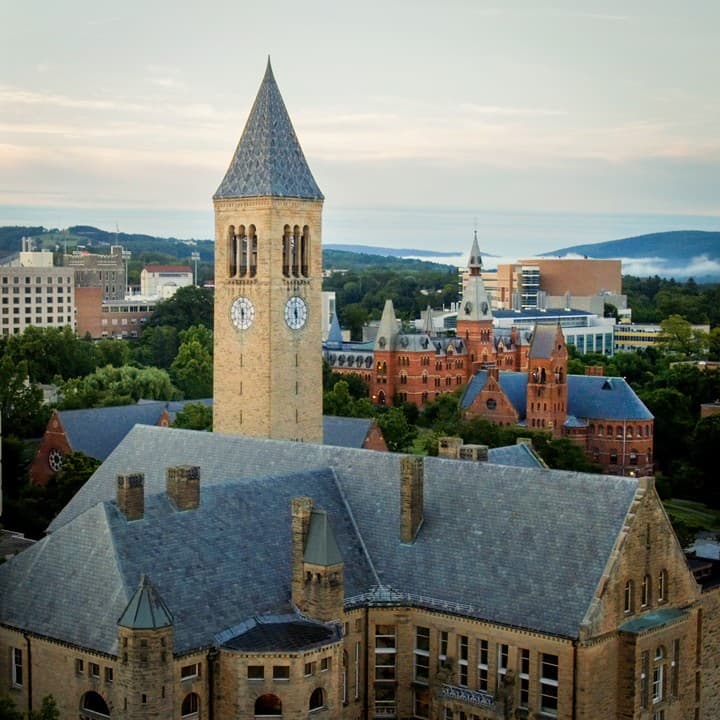
The broadest range of specialized undergraduate options in the Ivy League
Location, enrollment, and cost
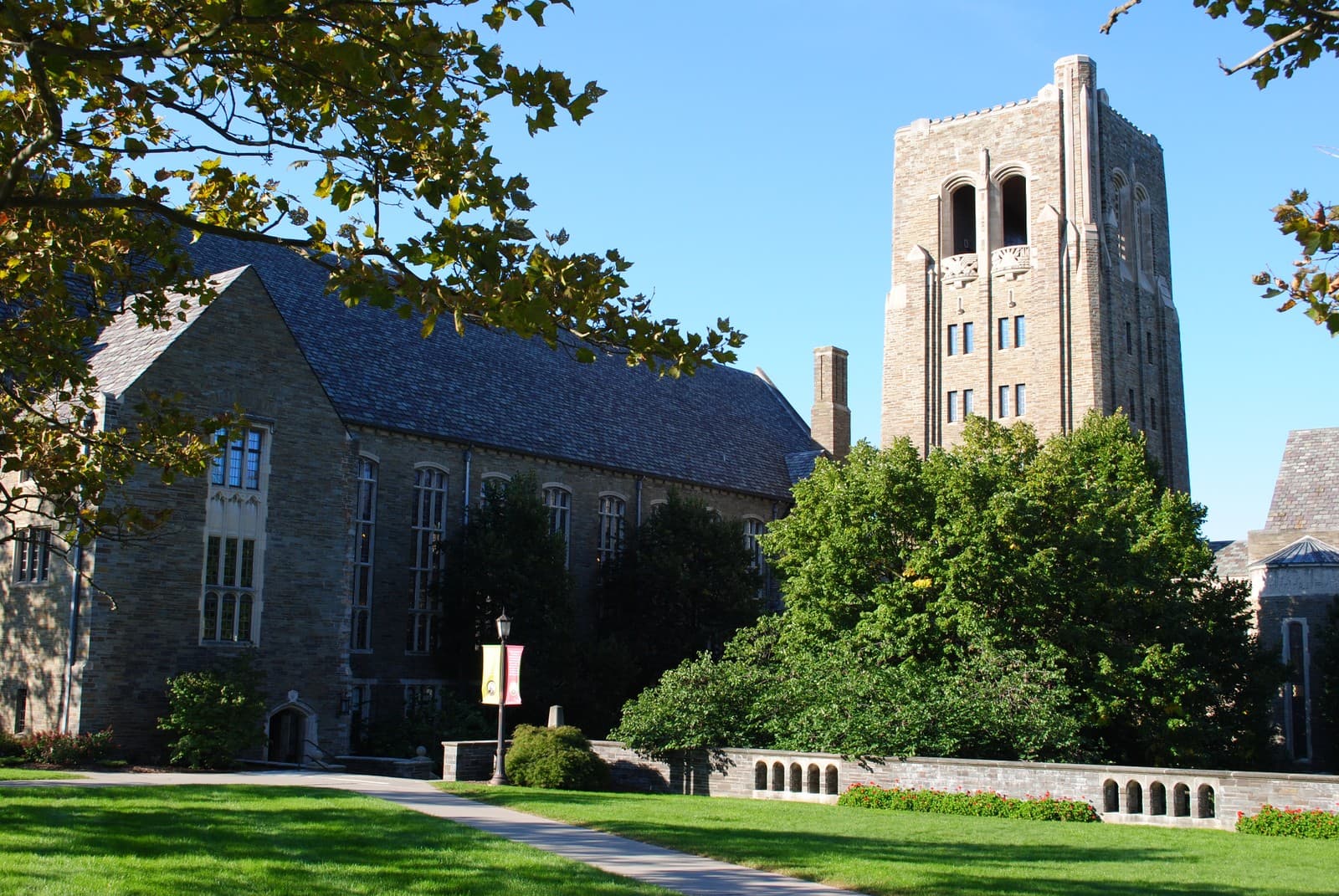
Cornell University’s main campus is in Ithaca, New York. Cornell Tech is located on Roosevelt Island in New York City, and Weill Cornell Medicine is based in Manhattan.
Cornell’s fall 2025 Common Data Set reports approximately 16,138 undergraduate students and 10,423 graduate and professional students, excluding portions of Weill Cornell Medicine from the main Ithaca-campus totals. Doctoral students are included in the graduate reporting rather than presented as one simple universitywide PhD headcount.
For 2026–27, the estimated cost for students in Cornell’s endowed colleges and non-New York residents in its contract colleges is approximately $99,734 before transportation. Tuition is $73,946.
New York residents enrolled in certain state-supported contract colleges have a lower tuition rate of $49,816, producing a substantially lower estimated total.
This difference is one of Cornell’s most important financial distinctions.
What makes Cornell’s undergraduate education distinctive
Cornell is the largest Ivy League university by undergraduate enrollment and offers one of the widest academic ranges.
Students apply to a particular undergraduate college or school rather than to one undifferentiated undergraduate division.
Its undergraduate structure includes programs in:
- Agriculture and Life Sciences
- Architecture, Art, and Planning
- Arts and Sciences
- Business
- Engineering
- Human Ecology
- Industrial and Labor Relations
- Public Policy
Across these divisions, Cornell offers nearly 80 majors, more than 120 minors, and thousands of courses.
This structure creates opportunity.
It also creates responsibility.
A Cornell applicant should know which college or school is the correct academic home.
Applying to the College of Engineering is not the same as applying to the College of Arts and Sciences.
Applying to the Nolan School of Hotel Administration is not the same as applying to the Dyson School of Applied Economics and Management.
The application must explain not merely why Cornell is appealing.
It must explain why the selected Cornell college and academic program make sense.

Particularly strong undergraduate areas
Cornell is particularly prominent in:
- Engineering and computer science
- Architecture
- Agriculture, food science, and environmental fields
- Biological and life sciences
- Hotel administration and hospitality
- Industrial and labor relations
- Applied economics and management
- Human development, nutrition, and design
- Public policy
- Veterinary and animal sciences
Cornell is especially useful for students whose interests are both intellectual and applied.
A student may study plant science, labor policy, hotel operations, mechanical engineering, architecture, information science, fashion design, or nutritional science within the same university.
Few highly selective institutions offer this breadth.
Graduate and professional programs
Cornell’s major graduate and professional schools include:
- Cornell Law School
- Samuel Curtis Johnson Graduate School of Management
- Weill Cornell Medicine
- College of Veterinary Medicine
- Graduate School
- Cornell Tech
- Graduate programs in engineering, architecture, policy, sciences, and humanities
Cornell Law offers a three-year JD and opportunities in advocacy, business law, technology and law, public law, international legal affairs, conflict resolution, and clinical practice.
Weill Cornell Medicine is located in New York City rather than Ithaca. This means the medical-school environment is geographically and institutionally connected to Cornell but does not function as though it were simply another building on the main undergraduate campus.
Financial aid and scholarships
Cornell states that it meets 100 percent of demonstrated financial need for eligible admitted undergraduate students.
For 2026–27, Cornell announced that, for families with typical assets:
- Grant aid may cover at least tuition for families earning up to $125,000
- Grants, scholarships, and work-study may cover the full cost of attendance for families earning up to $75,000
The actual award still depends on the complete financial profile.
Cornell’s institutional undergraduate grants and named scholarships are primarily need-based rather than general academic merit awards.
Students seeking aid generally complete the FAFSA when eligible, the CSS Profile, and requested tax documentation.
New York residents should also investigate state financial-aid programs and the financial implications of applying to one of Cornell’s contract colleges.
Who is the best fit for Cornell?
Cornell may be an excellent fit for a student who:
- Has a reasonably clear academic direction
- Wants a large university with many specialized programs
- Values research and practical application
- Is comfortable with a demanding academic environment
- Wants a traditional campus and college-town experience
- Is attracted to a field not widely offered at other Ivies
Cornell may be less suitable for a student who wants an extremely small college, dislikes cold weather or a geographically isolated campus, or has not researched the differences among Cornell’s undergraduate schools.
Cornell offers more routes than the other Ivies.
But the student must select the right entrance.
Dartmouth College
A smaller, close-knit community with unusual calendar flexibility
Location, enrollment, and cost
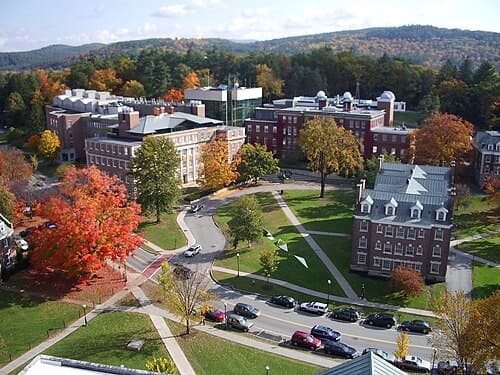
Dartmouth College is located in Hanover, New Hampshire.
Its 2025–26 Common Data Set reports approximately 4,715 undergraduate students and 2,558 graduate students, for a total of about 7,273. The graduate number includes students across Dartmouth’s graduate and professional divisions; a separate universitywide PhD-only total is not presented in this summary.
For 2026–27, Dartmouth lists tuition of $71,697 and an estimated first-year cost of attendance of approximately $98,946. Students who cannot waive Dartmouth’s health plan may face an additional insurance charge.
What makes Dartmouth’s undergraduate education distinctive
Dartmouth is smaller than most of the other Ivy League universities.
Its identity is shaped by:
- Strong undergraduate teaching
- Close faculty access
- A rural New England setting
- Outdoor traditions
- A tight residential community
- The flexible Dartmouth Plan, commonly called the D-Plan
The D-Plan divides the academic year into four ten-week terms.
Students complete a required number of terms in residence while using other periods for internships, research, employment, travel, or off-campus programs.
This flexibility can allow a student to pursue an internship during a less competitive season or study abroad without following the traditional semester rhythm.
But the quarter system moves quickly.
Ten-week courses leave limited time to recover from falling behind.
Particularly strong undergraduate areas
Among recent Dartmouth graduates, prominent majors have included:
- Economics
- Government
- Computer science
- Engineering sciences
- Biology
Dartmouth also has respected programs in environmental studies, quantitative social science, psychology and brain sciences, Native American and Indigenous studies, mathematics, and the humanities.
Dartmouth engineering has a distinctive human-centered approach.
Undergraduates may begin with a broad Bachelor of Arts in engineering sciences and, when desired, continue toward the professional Bachelor of Engineering through additional study. Project-based design and interdisciplinary problem-solving are important parts of the experience.

Graduate and professional programs
Dartmouth’s best-known graduate and professional divisions include:
- Geisel School of Medicine
- Tuck School of Business
- Thayer School of Engineering
- Guarini School of Graduate and Advanced Studies
Dartmouth does not have a law school.
Geisel’s MD curriculum integrates basic sciences, clinical learning, population health, teamwork, communication, leadership, and healthcare improvement. Dartmouth emphasizes its small medical-school learning community and close faculty relationships.
Tuck is a graduate business school and does not offer a traditional undergraduate business major.
Undergraduates interested in business generally study fields such as economics, mathematics, engineering, computer science, government, psychology, or another liberal arts discipline before pursuing business careers or later graduate study.
Financial aid and scholarships
Dartmouth states that it meets 100 percent of demonstrated undergraduate need without requiring student loans in the aid package.
Dartmouth also operates need-blind undergraduate admission regardless of citizenship, an important distinction for international applicants.
Under current guidelines, families with typical assets and income below $125,000 may have a zero parent contribution. Dartmouth has also announced free tuition for qualifying families with income up to $175,000, although the exact award depends on family assets and circumstances.
Institutional aid is need-based rather than merit-based.
Students seeking assistance generally submit the FAFSA when eligible, the CSS Profile, and supporting financial records.
Who is the best fit for Dartmouth?
Dartmouth may be an excellent fit for a student who:
- Wants a smaller Ivy League community
- Values close relationships with professors and classmates
- Enjoys outdoor recreation and a rural setting
- Likes a flexible academic calendar
- Wants strong liberal arts teaching within a research university
- Is comfortable with an active residential and social environment
It may be a weaker fit for a student who wants a major city, an extremely broad selection of specialized professional majors, or a traditional semester calendar.
Dartmouth’s size is part of its appeal.
Students are not choosing anonymity.
They are choosing community.

Harvard University
Breadth, scale, and academic opportunity across Cambridge and Boston
Location, enrollment, and cost
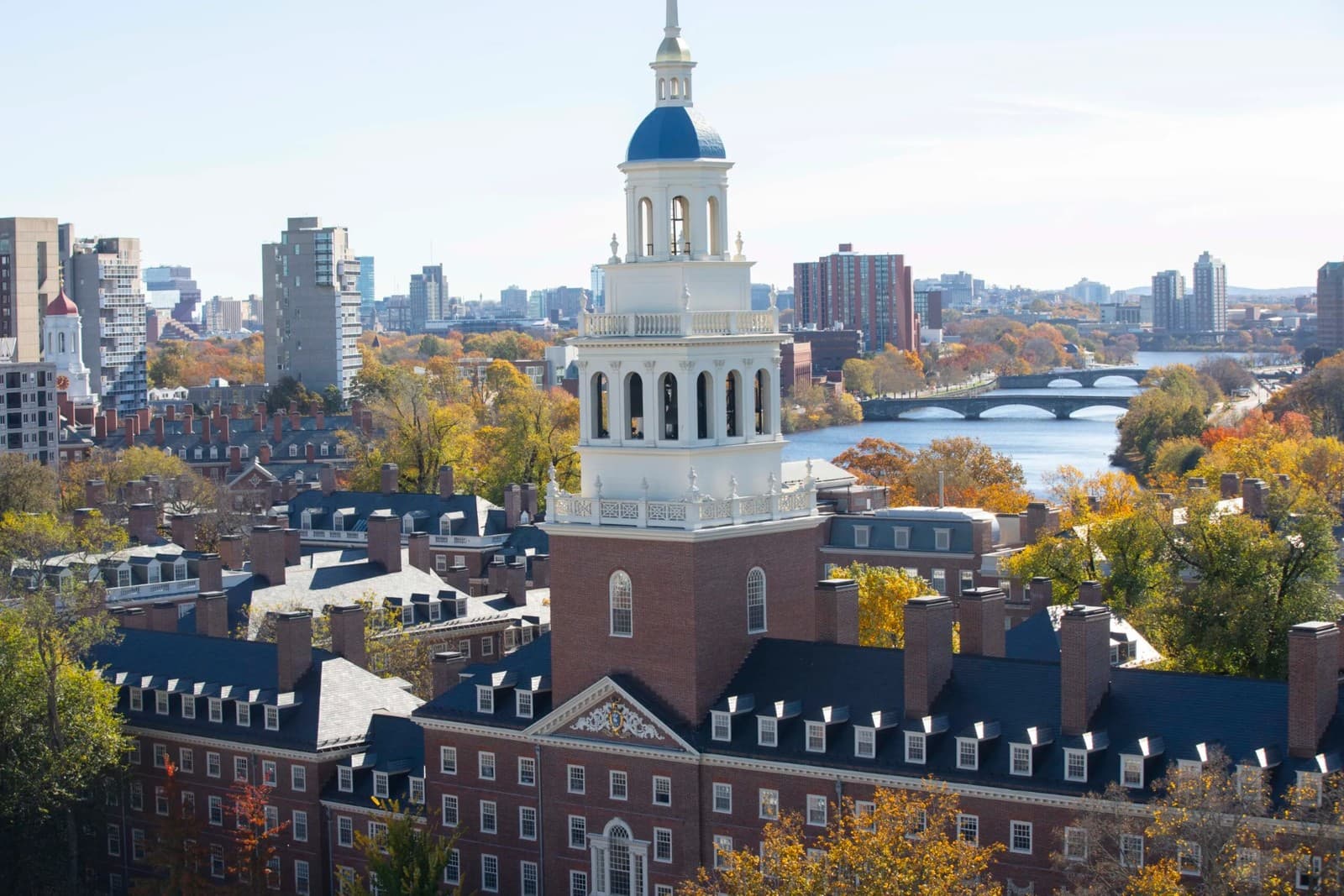
Harvard University’s undergraduate campus is located in Cambridge, Massachusetts, across the Charles River from Boston. Its medical and public-health institutions are concentrated largely in Boston’s Longwood Medical Area.
For fall 2025, Harvard reported 24,317 students across the university. That total included approximately 6,675 Harvard College students, 4,571 students in the Graduate School of Arts and Sciences, 1,895 at Harvard Business School, 2,039 at Harvard Law School, 1,392 at Harvard Medical School, and students across several additional graduate and professional schools.
Harvard does not present one simple universitywide PhD headcount in this school-level summary. Many research-doctoral students are housed in the Graduate School of Arts and Sciences, while others study through professional and interdisciplinary programs.
For 2026–27, Harvard lists undergraduate tuition of $62,226. Tuition, health-service fees, student-service fees, housing, and food produce direct charges of approximately $91,634, with personal expenses, travel, and health insurance potentially increasing the total student budget.
What makes Harvard’s undergraduate education distinctive
Harvard College combines a liberal arts and sciences education with access to one of the world’s largest research-university ecosystems.
Students choose from approximately 50 undergraduate fields, called concentrations, and more than 3,700 courses. They also complete requirements in general education, divisional distribution, expository writing, quantitative reasoning, and language study.
Harvard’s General Education program asks students to examine major questions through categories such as:
- Aesthetics and Culture
- Ethics and Civics
- Histories, Societies, Individuals
- Science and Technology in Society
The result is more structured than Brown’s Open Curriculum but less centered on one fixed sequence of common texts than Columbia’s Core.
Harvard students may pursue a single concentration, a double concentration, a joint interdisciplinary concentration, and optional secondary fields.
Particularly strong undergraduate areas
Harvard is prominent across an unusually broad range of disciplines, including:
- Economics
- Government
- Computer science
- Applied mathematics and statistics
- Molecular and cellular biology
- Neuroscience
- Engineering sciences
- History and literature
- Philosophy
- Social Studies
- Environmental science and public policy
Its strength is not only that individual departments are highly resourced.
It is that students can connect them.
A student may combine computer science and government.
Another may study economics while completing coursework at the Kennedy School.
Another may conduct biomedical research through affiliated hospitals and laboratories.
Another may connect history, literature, language, art, or music.
The Harvard name may initially attract a student.
But the application must eventually communicate what the student intends to do with Harvard’s resources.
Prestige alone is not an academic plan.

Graduate and professional programs
Harvard’s graduate and professional schools include:
- Harvard Medical School
- Harvard Law School
- Harvard Business School
- Harvard Kennedy School
- Harvard Graduate School of Education
- Harvard T.H. Chan School of Public Health
- Harvard Graduate School of Design
- Graduate School of Arts and Sciences
- Harvard Divinity School
Harvard Medical School offers two MD curricular tracks.
The Pathways track emphasizes active learning, early clinical experience, scientific study, teamwork, and an individual scholarly project.
The Health Sciences and Technology track is offered jointly with MIT and is designed for students with deep interests in biomedical science, quantitative research, engineering, and translational medicine.
Harvard Law School combines a large JD program with extensive clinics, research centers, journals, public-interest opportunities, international study, negotiation, technology law, health law, human rights, corporate law, and numerous other fields.
Admission to Harvard College does not provide automatic access to Harvard’s medical, law, or business schools. Each requires a separate application after undergraduate study.
Financial aid and scholarships
Harvard’s undergraduate financial aid is entirely need-based.
Under aid policies announced for the 2025–26 academic year and beyond, families with typical assets and annual income up to $100,000 may qualify to attend without a parent contribution and with major billed and personal educational costs covered.
Families with typical assets and income up to $200,000 may qualify for at least full tuition support, with additional assistance possible based on circumstances.
Some families above $200,000 may also qualify.
Harvard does not award undergraduate merit or athletic scholarships.
Domestic aid applicants generally submit the FAFSA, CSS Profile, and IDOC documentation. Harvard is need-blind for undergraduate applicants, including international students, and meets demonstrated need for admitted students under its institutional formula.
Who is the best fit for Harvard?
Harvard may be an excellent fit for a student who:
- Has demonstrated intellectual initiative
- Wants exceptional breadth and research access
- Can navigate a large and decentralized university
- Values interdisciplinary opportunities
- Is energized by Cambridge and Boston
- Has a clear sense of how they would use extensive institutional resources
It may be less appropriate for a student seeking a small, highly intimate campus where every opportunity is placed directly in front of them.
Harvard offers enormous possibility.
But possibility can become overwhelming without initiative.
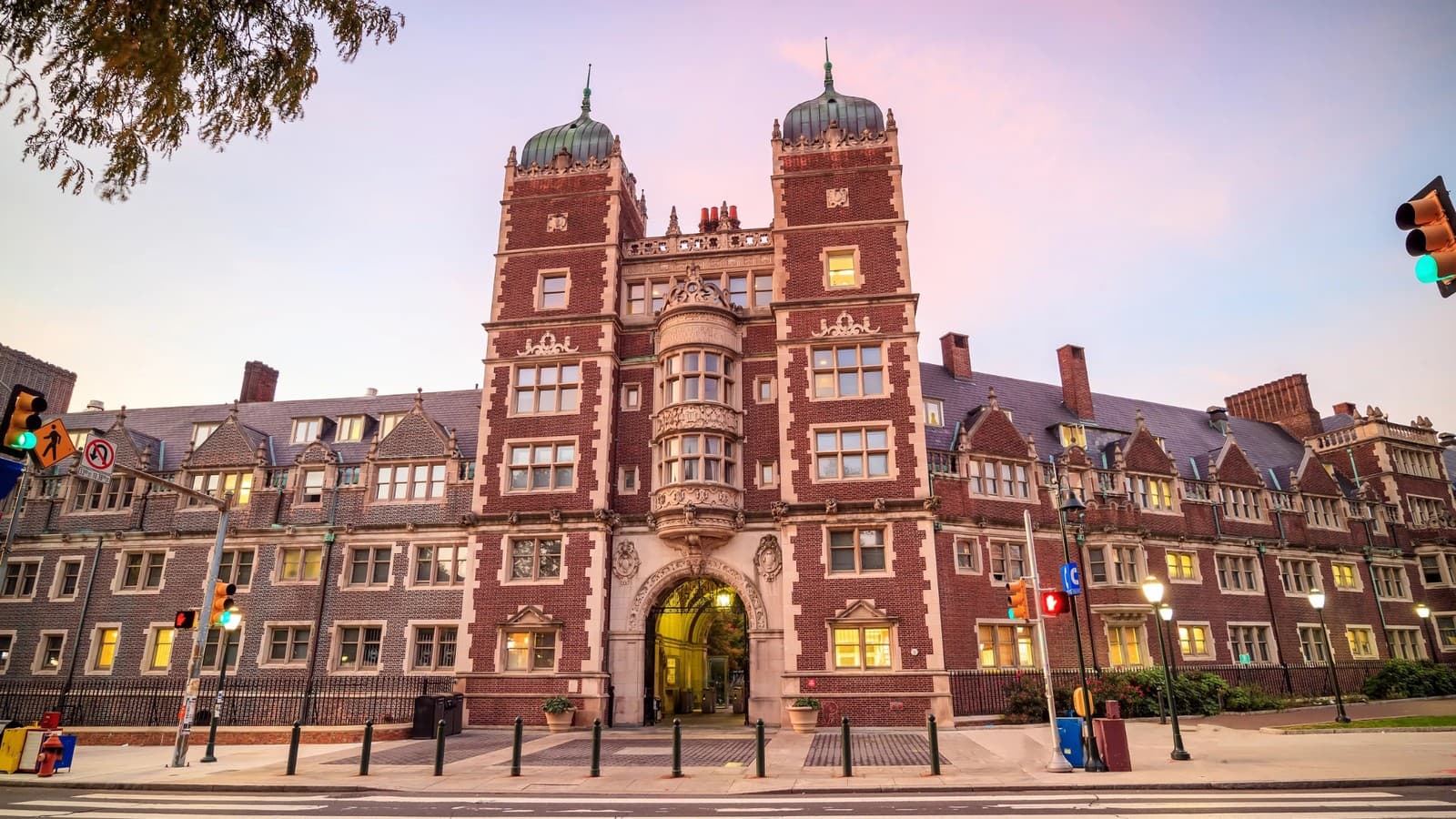
The University of Pennsylvania
Interdisciplinary education with a practical and preprofessional energy
Location, enrollment, and cost
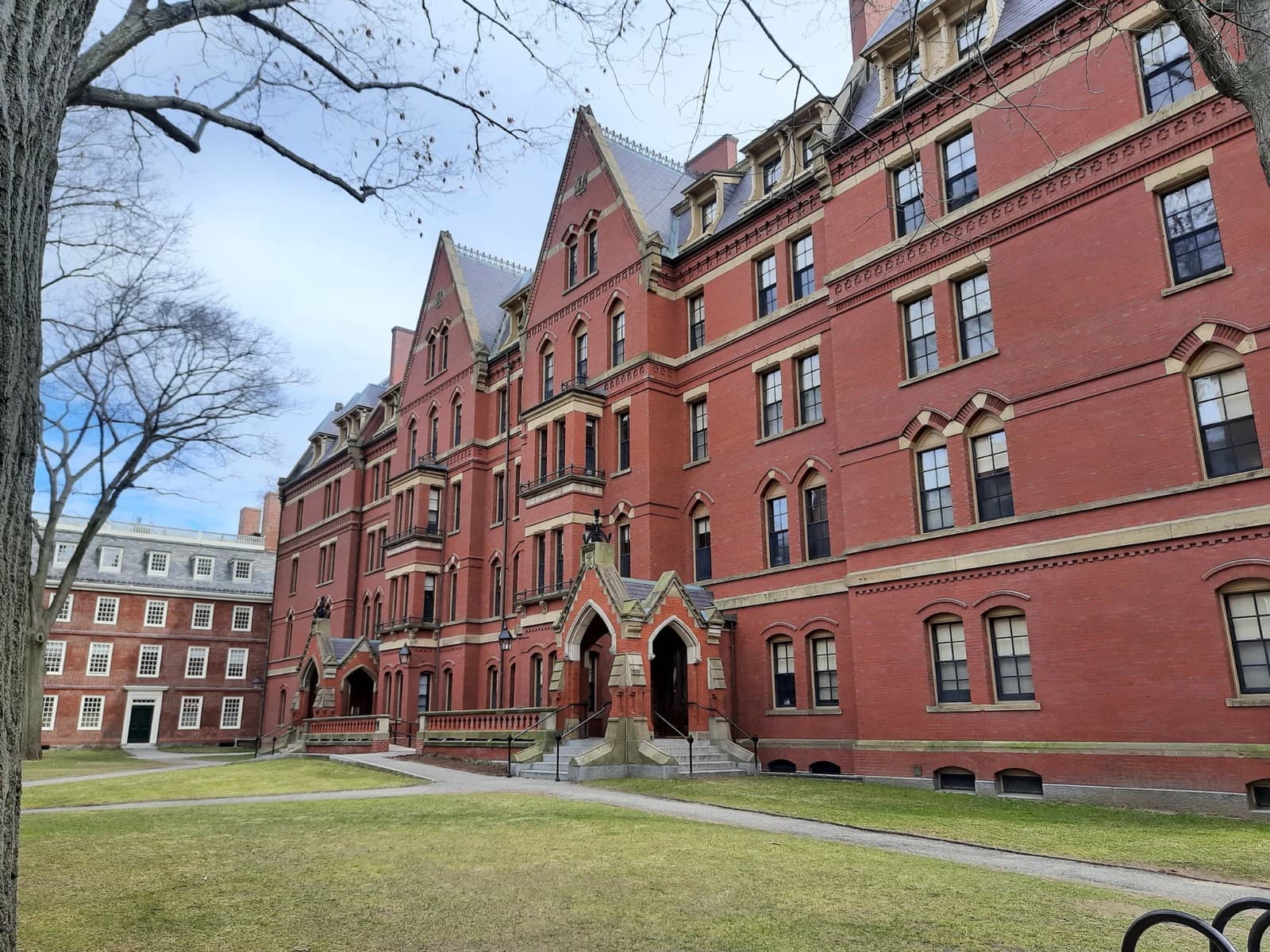
The University of Pennsylvania, commonly called Penn or UPenn, is located in Philadelphia, Pennsylvania.
For fall 2025, UPenn reported approximately 10,325 full-time undergraduate students, 14,006 full-time graduate and professional students, and an additional 5,053 part-time students. Doctoral students are included within the graduate and professional totals rather than separated in this overview.
For 2026–27, UPenn’s undergraduate budget includes tuition of $65,670 and a total estimated cost of $99,082 for tuition, fees, housing, food, books, transportation, and personal expenses. Health insurance and certain additional expenses may increase the final amount.
What makes UPenn’s undergraduate education distinctive
Penn is organized around four undergraduate schools:
- College of Arts and Sciences
- School of Engineering and Applied Science
- School of Nursing
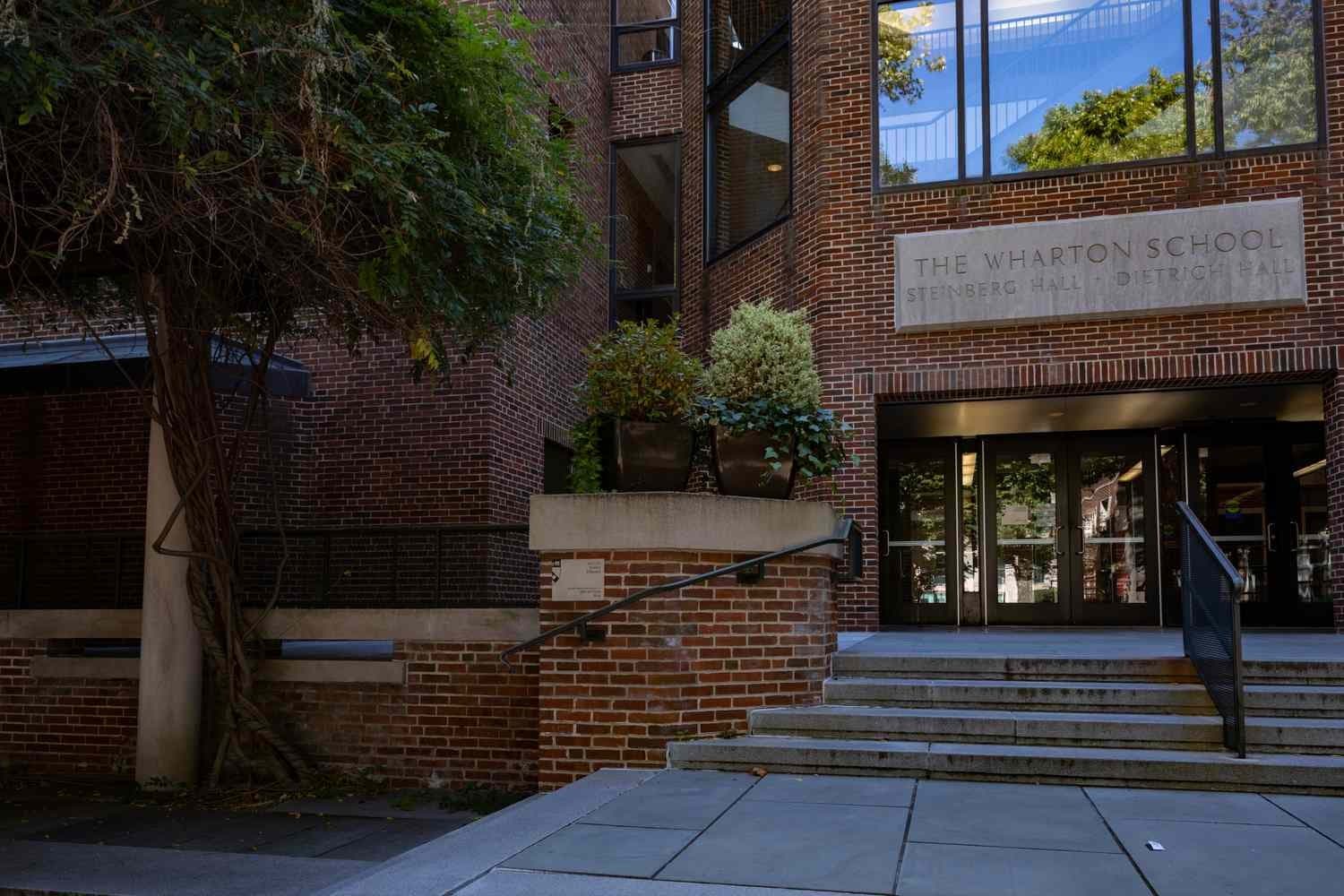
- Wharton School
Applicants select one of these schools—or a coordinated dual-degree or specialized program—as their academic home.
Students may still take courses across the university, but the chosen school determines the primary degree requirements and should align with the student’s preparation and goals.
Penn frequently describes its academic culture through the idea of “One University.”
Business students may study computer science.
Engineering students may take design, entrepreneurship, or policy courses.
Nursing students may connect healthcare with management or technology.
Arts and Sciences students may combine traditional liberal arts fields with applied opportunities.
This interdisciplinarity is one of Penn’s defining strengths.
But an applicant must be specific.
A student applying to Wharton should not write as though the application were to a generic economics program.
A student applying to Nursing should demonstrate serious interest in patient care and health.
A student applying to Engineering should show appropriate mathematical preparation and an interest in building or applying technology.
Particularly strong undergraduate areas
UPenn is especially prominent in:
- Business through Wharton
- Nursing
- Computer science and engineering
- Economics
- Neuroscience and biological sciences
- Psychology
- Communications
- Political science and philosophy, politics, and economics
- Design, entrepreneurship, and data-oriented fields
Wharton’s undergraduate program is among UPenn’s most distinctive offerings.
Students receive a business education grounded in analytics, economics, leadership, organizations, and global perspectives while also taking courses throughout the broader university.
UPenn Nursing combines science, clinical preparation, research, and patient-centered education.
UPenn Engineering emphasizes technical ability, innovation, interdisciplinary design, and practical problem-solving.
Graduate and professional programs
UPenn’s major graduate and professional schools include:
- Perelman School of Medicine
- Carey Law School
- Wharton School
- School of Dental Medicine
- School of Veterinary Medicine
- Graduate School of Education
- School of Engineering and Applied Science
- Weitzman School of Design
- School of Social Policy and Practice
Perelman’s IMPaCT medical curriculum integrates basic, translational, clinical, social, and health-systems sciences from the beginning of training. It also provides extensive opportunities for dual degrees, certificates, research, global health, and individualized study.
UPenn Carey Law offers the JD alongside extensive interdisciplinary study and dual-degree possibilities across Penn’s other schools. This structure can be especially useful for students interested in law combined with business, technology, medicine, public policy, education, or social impact.
Financial aid and scholarships
UPenn’s undergraduate institutional assistance is entirely need-based.
UPenn does not award academic, athletic, or talent-based merit scholarships.
Its grant-based financial-aid program commits to meeting 100 percent of demonstrated undergraduate need without placing loans in the initial aid package.
Under UPenn’s current Quaker Commitment:
- Families with typical assets and income up to $200,000 may qualify for aid covering at least tuition
- Families with typical assets and income up to $75,000 may qualify for aid covering billed expenses and additional educational support
Individual awards still vary based on the full financial picture.
Students generally submit the FAFSA when eligible, the CSS Profile, and supporting financial records.
Who is the best fit for UPenn?
UPenn may be an excellent fit for a student who:
- Wants to connect academic theory with practical impact
- Is attracted to business, nursing, engineering, or interdisciplinary study
- Has a clear reason for choosing one of Penn’s four undergraduate schools
- Enjoys teamwork, organizations, projects, and professional exploration
- Wants an urban campus with a defined campus community
- Is motivated by internships, entrepreneurship, and career development
UPenn may be less suitable for a student who wants a purely contemplative liberal arts experience with little preprofessional influence.
UPenn students frequently ask:
What can I learn?
But they also ask:
What can I build, improve, launch, lead, or change?

Princeton University
Undergraduate focus, independent research, and a deeply residential campus
Location, enrollment, and cost
Princeton University is located in Princeton, New Jersey, between New York City and Philadelphia.
For 2025–26, Princeton reported approximately 5,825 undergraduate students, 3,365 graduate students, and 142 special students. Doctoral and master’s students are included within the graduate total rather than separated in the university’s brief enrollment summary.
For 2026–27, Princeton’s first-year and sophomore student budget includes:
- Tuition of $68,140
- Housing of $13,010
- Food of $9,110
- Books, personal expenses, and fees
The resulting total is approximately $94,624 before transportation and, when needed, university health insurance.
What makes Princeton’s undergraduate education distinctive
Princeton is particularly known for its commitment to undergraduate education.
Although it is a major research university, it has fewer graduate and professional divisions than Harvard, Columbia, or Penn and does not have medical, law, or business schools.
This gives the undergraduate college a central role in the institution.
Princeton students choose between the Bachelor of Arts and Bachelor of Science in Engineering pathways.
A major part of the academic experience is independent work.
Students in many departments complete junior papers, research projects, and a senior thesis. The thesis asks students to investigate a substantial question under faculty guidance and produce original scholarly or creative work.
This requirement can be demanding.
But it can also become one of the most meaningful parts of a Princeton education.
Students do not simply take courses about knowledge created by others.
They are expected to contribute work of their own.
Particularly strong undergraduate areas
Princeton is especially prominent in:
- Economics
- Public and international affairs
- Mathematics
- Physics
- Computer science
- Engineering
- Molecular biology
- Neuroscience
- History
- Philosophy
- Politics
- Literature and the humanities
The Princeton School of Public and International Affairs offers undergraduate study that connects economics, politics, history, sociology, science, and policy analysis.
Engineering students benefit from a relatively small engineering school within a liberal arts environment.
Students in the sciences and humanities have extensive opportunities for faculty-guided research, including funded summer work and international projects.
Graduate and professional programs
Princeton does not have a medical school.
It does not have a law school.
It does not have a conventional business school.
Its graduate identity is built primarily around research-oriented master’s and doctoral education.
Major strengths include:
- Engineering
- Economics
- Mathematics
- Physics
- Computer science
- Molecular biology
- Politics
- History
- Philosophy
- Humanities
- Public and international affairs
Princeton’s engineering graduate school includes a large doctoral population, and its research PhD programs generally provide significant funding.
The Princeton School of Public and International Affairs offers the Master in Public Affairs, mid-career public-policy programs, and doctoral study. Princeton provides substantial or full funding for several of these programs.
A student who wants an Ivy with its own medical center, law school, and business school may prefer another institution.
A student who wants a university concentrated around undergraduate education and research may find Princeton especially attractive.

Financial aid and scholarships
Princeton’s undergraduate financial aid is need-based.
The university does not award merit or athletic scholarships.
Princeton also differs from most of the other Ivies because it uses its own Princeton Financial Aid Application, or PFAA, instead of requiring the CSS Profile. Eligible U.S. students also complete the FAFSA.
Princeton’s current aid table indicates that, for a family with typical assets, the expected family contribution may be $0 at income levels up to approximately $150,000, with substantial grant assistance continuing at higher incomes.
These are sample estimates rather than promises. Home equity, business ownership, family size, multiple children in college, and other factors can affect the calculation.
Princeton’s aid is grant-based and designed to meet demonstrated need without requiring students to rely on loans in the standard package.
Who is the best fit for Princeton?
Princeton may be an excellent fit for a student who:
- Wants close undergraduate faculty engagement
- Is excited by research and independent academic work
- Values a traditional residential campus
- Is prepared to write a substantial senior thesis or complete major independent work
- Wants rigorous liberal arts, sciences, engineering, economics, or policy study
- Prefers a smaller university without large professional-school populations
Princeton may be less suitable for a student who wants a major city, an undergraduate business school, or direct access to an on-campus medical or law school.
At Princeton, intellectual independence is not an optional extracurricular activity.
It is built into the degree.

Yale University

Liberal arts flexibility within a residential-college community
Location, enrollment, and cost
Yale University is located in New Haven, Connecticut.
For 2025, Yale reported approximately 15,657 students, including 6,667 undergraduates and 8,990 graduate and professional students.
Approximately 3,130 students were enrolled in the Graduate School of Arts and Sciences, which includes master’s and doctoral students. Yale does not provide one separate universitywide PhD-only total in its brief facts summary.
For 2026–27, Yale’s estimated undergraduate cost of attendance is approximately $97,985 before individual travel costs. The budget includes $72,500 in tuition, $12,080 for housing, $9,520 for food, and allowances for books and personal expenses.
What makes Yale’s undergraduate education distinctive
Yale combines the resources of a research university with a liberal arts undergraduate structure.
Students enter Yale College without declaring a major and generally have until the end of sophomore year to choose from more than 80 majors.
Yale does not use a fixed core curriculum. Students have considerable freedom but complete distributional requirements intended to ensure breadth across disciplines and methods.
The residential-college system is central to Yale’s culture.
Every undergraduate is assigned to one of 14 residential colleges.
These colleges are not academic divisions.
They are smaller communities containing housing, dining, advising, libraries, common spaces, traditions, social activities, intramural teams, and opportunities to interact with faculty and visiting speakers.
This creates an unusual combination.
The university is large enough to offer extensive research, arts, professional schools, and global programs.
But each student also belongs to a smaller home community.
Particularly strong undergraduate areas
Yale is especially prominent in:
- History
- Political science
- Economics
- Global affairs
- English and comparative literature
- Philosophy
- Art, architecture, music, theater, and performance
- Molecular, cellular, and developmental biology
- Neuroscience
- Statistics and data science
- Computer science and engineering
- Ethics, politics, and economics
Yale is particularly attractive to students who do not want to choose between the humanities and sciences.
A student may study computer science and music.
Another may combine economics with mathematics.
Another may pursue neuroscience while participating in theater.
Another may connect history, global affairs, language, and public policy.
The university describes this as a culture of “and” rather than “or.”
Graduate and professional programs
Yale’s major graduate and professional schools include:
- Yale Law School
- Yale School of Medicine
- Yale School of Management
- Jackson School of Global Affairs
- School of the Environment
- School of Art
- School of Architecture
- School of Music
- David Geffen School of Drama
- Graduate School of Arts and Sciences
Yale Law is known for a small student-faculty ratio, close scholarly work, major writing requirements, and extensive clinical opportunities. First-year students participate in small groups, and students may enter clinics as early as the second semester of the first year.
Yale School of Medicine’s curriculum emphasizes flexibility, student initiative, faculty mentoring, collaboration, research, and a required thesis. Its medical curriculum was updated in 2026 and moves students through pre-clerkship learning, integrated clinical clerkships, advanced training, electives, and research.

Financial aid and scholarships
Yale awards undergraduate institutional aid based on financial need rather than merit.
It practices need-blind undergraduate admission for applicants regardless of citizenship and commits to meeting 100 percent of demonstrated need.
Yale does not include loans in the initial undergraduate financial-aid package, although families may elect to borrow.
Beginning with the expanded policies announced in 2026, qualifying families with typical assets and income below $100,000 may attend without a family contribution toward the full cost of attendance.
Qualifying families with typical assets and income below $200,000 may receive aid covering at least full tuition.
Families above these levels may still qualify depending on their circumstances.
Aid applicants generally submit the CSS Profile, FAFSA when eligible, and requested supporting documentation.
Who is the best fit for Yale?
Yale may be an excellent fit for a student who:
- Wants academic flexibility within a strong community structure
- Values the arts, humanities, sciences, and interdisciplinary study
- Wants a residential-college experience
- Enjoys discussion, traditions, performances, and campus involvement
- Seeks close intellectual relationships within a major research university
- Is interested in combining several dimensions of their identity and interests
Yale may be a weaker fit for a student seeking an undergraduate business school, a highly specialized professional major, or a largely independent urban experience.
Yale’s central promise is not that students must choose one identity.
It is that several interests can belong in the same education.

How to Determine Which Ivy League School Fits You
Families often begin with reputation.
They should begin with questions.
What kind of curriculum helps the student thrive?
A student who wants maximum academic freedom may prefer Brown.
A student who wants a shared foundation in major texts and ideas may prefer Columbia.
A student who wants specialized undergraduate colleges may prefer Cornell or Penn.
A student who values independent research and a senior thesis may prefer Princeton.
A student seeking flexible liberal arts exploration may prefer Harvard or Yale.
A student seeking a smaller undergraduate community may prefer Dartmouth.
The correct curriculum is not necessarily the one with the most freedom.
Some students use freedom productively.
Others benefit from structure.
What kind of location feels sustainable?
Columbia places the student directly in Manhattan.
Penn offers an urban environment with a defined campus in Philadelphia.
Harvard combines Cambridge with access to Boston.
Yale offers an urban campus in New Haven.
Brown is located in a smaller city with access to Boston and the broader New England region.
Princeton offers a college-town and suburban setting with rail access to major cities.
Cornell offers a more isolated campus surrounded by natural beauty.
Dartmouth offers the most rural and outdoor-oriented environment of the eight.
A student should not choose a location based only on a weekend visit.
The question is:
Can I imagine living, studying, commuting, socializing, and handling stress here for four years?
Does the university offer the correct academic home?
A student interested in business should examine Penn’s Wharton School and Cornell’s undergraduate business options.
A student interested in architecture should compare Cornell’s undergraduate architecture program with the pathways available at Yale, Columbia, Princeton, and Penn.
A student interested in nursing should understand that Penn offers a dedicated undergraduate nursing school, while most other Ivies do not.
A student interested in engineering should compare not only rankings but also curriculum size, design opportunities, research access, cross-registration, culture, and the percentage of the institution devoted to engineering.
A student interested in medicine should not assume that attending a university with a famous medical school automatically improves medical-school admission.
Pre-medical students can major in almost any field.
Their success will depend on academic performance, required science preparation, clinical exposure, service, research when appropriate, recommendations, maturity, and performance on the medical-school application process.
Does the social environment match the student?
Campus culture matters.
So does housing.
So do class size, student organizations, school spirit, weather, athletics, arts, political life, religious communities, cultural organizations, outdoor opportunities, and access to mental-health and academic support.
A university may look perfect in a brochure but feel wrong in daily life.
Families should attend information sessions.
They should tour when possible.
They should speak with current students.
They should read course catalogs.
They should examine the actual requirements of the intended major.
They should investigate where students live after the first year.
They should look beyond the famous library photograph.
Fit is found in the ordinary details.
Is the college financially realistic?
Every family should use each university’s official net price calculator before applying through a binding Early Decision program.
The same family can receive different estimates from different Ivy League universities because each institution uses its own formula.
A school with a higher published cost may become the least expensive option after aid.
Another may calculate that the family can contribute much more than it believes is realistic.
The family should examine:
- Expected parent contribution
- Student work expectations
- Treatment of home equity
- Treatment of business or farm ownership
- Noncustodial-parent requirements
- Health-insurance charges
- Travel expenses
- Outside-scholarship treatment
- Appeal procedures
- Four-year affordability
A college is not a good fit when attending it would destabilize the family financially.
Academic fit and financial fit must be evaluated together.
How to Apply to Ivy League Schools
There is no separate Ivy League application.
Each university makes its own admission decision.
Most use the Common Application, although some provide additional application platforms or pathways such as QuestBridge.
Every institution also requires its own supplemental questions.
A student applying to eight Ivy League schools is not submitting one application eight times.
The student is completing eight separate arguments about fit.

Begin with the academic record
The foundation of a competitive application is a strong transcript.
Admission officers evaluate:
- Grades
- Course rigor
- Performance over time
- Core academic preparation
- The opportunities available at the student’s school
- The student’s academic direction
- Context affecting the student’s education
Students should take challenging courses when reasonably available.
But they should not build a schedule so extreme that their grades, health, sleep, activities, or ability to learn collapse.
Rigor is not a contest to collect the largest number of AP labels.
The course schedule should demonstrate readiness for the student’s intended academic direction.
An engineering applicant should show substantial mathematics and science preparation.
A prospective nursing student should have strong preparation in biology and chemistry.
A humanities applicant should show advanced reading, writing, language, history, or related work when available.
Understand the current testing policies

Testing rules have changed repeatedly, so applicants must verify them during the year they apply.
For students applying during the 2026–27 admission cycle for fall 2027 entry:
- Brown requires the SAT or ACT
- Cornell requires the SAT or ACT
- Dartmouth requires standardized testing under its published policy
- Harvard requires the SAT or ACT, with limited alternatives in exceptional access circumstances
- Penn currently requires the SAT or ACT or an approved hardship waiver
- Yale requires the SAT or ACT
- Columbia remains test-optional for this cycle
- Princeton remains test-optional for fall 2027 entry and plans to restore its requirement for the following cycle
Test-optional does not mean that testing is unimportant for every applicant.
A strong score may support the academic case.
A weaker score may not.
The decision should be made in the context of the university’s policy, the student’s school, course rigor, academic record, access to testing, and the score ranges of previously enrolled students.
Choose the early plan carefully
Brown, Columbia, Cornell, Dartmouth, and Penn offer binding Early Decision.
A student admitted through a binding program is expected to enroll, subject to the institution’s financial-aid process.
Harvard uses Restrictive Early Action.
Princeton and Yale use Single-Choice Early Action.
These programs are nonbinding but limit other early applications in specific ways.
Applying early should not be used merely because a school appears statistically easier in the early round.
Early applicants may include recruited athletes, institutional-priority candidates, and students with unusually strong alignment or preparation.
The most important early questions are:
Is this clearly the student’s first-choice institution?
Has the student researched the program thoroughly?
Has the family used the net price calculator?
Can the student submit their strongest application by the early deadline?
Does the early policy restrict another option the student may prefer?
Early application is a commitment strategy.
It is not a shortcut.
Write school-specific supplements
A generic essay about prestige, rankings, famous alumni, or “world-class professors” will not distinguish an applicant.
The student must explain why the university’s actual structure matters.
For Brown, that may involve the Open Curriculum and how the student would use academic freedom.
For Columbia, it may involve the Core Curriculum and the relationship between the university and New York City.
For Cornell, it must address the specific undergraduate college, major, and opportunities.
For Dartmouth, it may involve community, undergraduate teaching, the D-Plan, or the college’s setting.
For Harvard, it may demonstrate intellectual vitality and how the student would use interdisciplinary resources.
For Penn, it should clearly connect to the selected undergraduate school and Penn’s applied, interdisciplinary opportunities.
For Princeton, it may address independent work, research, service, or a particular academic department.
For Yale, it may show how the student would combine academic interests with the residential and extracurricular community.
The essay should not say only:
“This university has everything.”
It should explain:
“Here is what I hope to study, why it matters to me, what I have already done to explore it, and how I would participate in this particular community.”
Show depth and impact outside the classroom

Ivy League universities do not require one specific activity.
They do not admit only researchers.
They do not admit only nonprofit founders.
They do not admit only national champions.
They do not admit only students who have participated in expensive programs.
Activities are evaluated in context.
A student may demonstrate meaningful engagement through:
- Family responsibilities
- Employment
- Research
- Athletics
- Music or art
- Community service
- School leadership
- Cultural or religious involvement
- Advocacy
- Entrepreneurship
- Academic competitions
- Independent projects
- Caregiving
- Tutoring
- Local problem-solving
The central questions are:
What did the student care about?
How consistently did the student pursue it?
What did the student learn?
What responsibility did the student accept?
What changed because the student participated?
A title without contribution is weak.
A smaller activity with sustained, measurable impact can be powerful.
Choose recommendations that reveal the student
Most of these universities request recommendations from academic teachers and the school counselor.
Students should choose teachers who can discuss more than the final grade.
A strong recommendation may describe:
- Intellectual curiosity
- Classroom contribution
- Writing or analytical ability
- Response to feedback
- Character
- Collaboration
- Initiative
- Improvement
- Resilience
- The effect the student has on others
Students should request recommendations early and provide useful background.
But they should never write the recommendation for the teacher.
The letter must remain the recommender’s independent assessment.

Apply for financial aid at the same time
Admission and financial aid require separate forms and deadlines.
Most of the Ivies use the CSS Profile in addition to the FAFSA for eligible domestic applicants.
Princeton uses its own Princeton Financial Aid Application instead of the CSS Profile.
Families may also be asked for:
- Federal tax returns
- W-2 forms
- Business or farm documentation
- Noncustodial-parent information
- Foreign income records
- Verification documents
- Explanations of special circumstances
Missing financial-aid materials can delay an offer.
Families should not wait until admission decisions arrive to begin gathering the information.
Build a balanced college list
Every Ivy League school should be treated as a reach.
That remains true for students with perfect grades, outstanding test scores, national awards, significant research, athletic recruitment, or extraordinary leadership.
Qualified applicants greatly outnumber available seats.
A responsible list should contain:
- Highly selective reaches
- Academic target schools
- Likely-admission schools
- Financially realistic schools
- At least one option the student would genuinely be happy to attend
An Ivy League school can be part of a thoughtful college plan.
It should not be the entire plan.
The Best Ivy Is the One That Fits the Student
There is no universal best Ivy League school.
There is only the school whose academic structure, programs, environment, values, opportunities, and cost best support a particular student.
Brown offers freedom.
Columbia offers a shared intellectual foundation in New York.
Cornell offers breadth and specialization.
Dartmouth offers intimacy, flexibility, and community.
Harvard offers extraordinary scale and interdisciplinary possibility.
Penn offers practical, preprofessional, and cross-school opportunities.
Princeton offers undergraduate focus and independent scholarship.
Yale offers liberal arts flexibility within a powerful residential community.
A student should not apply to all eight simply because they share a label.
The application should follow the fit.
Not the other way around.
The goal is not to collect the largest number of prestigious names.
It is to identify the places where the student can:
Learn deeply.
Contribute meaningfully.
Develop healthy relationships.
Access the right opportunities.
Afford the education.
And grow into the person they are capable of becoming.
Because admission is not the final achievement.
It is the beginning of four years of work, challenge, uncertainty, discovery, and change.
The most valuable question is not:
“Which Ivy League school is ranked highest?”
It is:
“At which university will this student be able to build the strongest, healthiest, and most meaningful future?”
That is the fit that matters.

Editor’s note: Tuition, student enrollment, testing rules, application requirements, financial-aid formulas, income guidelines, and program structures may change from year to year. Families should verify current information directly with each university’s admissions and financial-aid offices before applying.