
The Student Loan Maze
Why FAFSA, Federal Loans, Private Loans, Grants, and the New Rules Are More Complicated Than They Appear
Written By DCP Blog Content Management Intern Abhi Kandi · on July 24th, 2026 · 36 min read

Table of Contents
They say college is an investment.
And in many ways, it is.
An investment in education.
An investment in independence.
An investment in a student’s future earning potential.
But for many families, the investment does not begin with a diploma.
It begins with a bill.
A student receives an acceptance letter.
The family celebrates.
The college sends a financial-aid offer.
The family opens it.
There may be a scholarship.
There may be a grant.
There may be work-study.
There may be several different loans.
And then there may still be a remaining balance.
Suddenly, the question is no longer only:
“Did my child get into college?”
It becomes:
“How much will we need to borrow?”
And immediately after that:
“Which loan should we choose?”
This is where many families enter the student-loan maze.
They hear phrases such as:
FAFSA loan.
Subsidized loan.
Unsubsidized loan.
Parent PLUS loan.
Private student loan.
Fixed rate.
Variable rate.
Cosigner.
Income-driven repayment.
Loan forgiveness.
These terms may appear together in the same financial-aid conversation.
But they do not represent the same thing.
They do not carry the same protections.
They do not place the debt on the same person.
And they do not create the same long-term financial risk.
A federal student loan may appear next to a grant in a financial-aid offer, even though one must be repaid and the other generally does not.
A private lender may advertise a rate that appears lower than the federal rate, even though the private loan may provide fewer options if the graduate later loses a job.
A Parent PLUS loan may help a family cover a large college balance, but the debt legally belongs to the parent.
A private student loan may legally belong to the student while still making a parent responsible as a cosigner.
These distinctions matter.
Because a loan is not simply money that arrives today.
It is a claim on someone’s future income.
And when families borrow without understanding who owes the debt, how interest grows, what protections exist, and what happens when repayment becomes difficult, the college decision can follow the family for many years.
The goal should not be to find the fastest way to cover the bill.
The goal should be to understand the entire financial commitment before anyone signs.

FAFSA Is Not a Loan
One of the most common financial-aid misunderstandings begins with the phrase:
“FAFSA loan.”
Technically, there is no loan called a FAFSA loan.
The Free Application for Federal Student Aid, commonly known as the FAFSA, is an application.
It is the form students complete to be considered for federal grants, federal work-study, federal student loans, and certain state and college-based financial-aid programs.
The FAFSA does not lend money.
A bank does not receive the FAFSA and approve a private loan.
The form collects financial and household information that is used to help determine the student’s eligibility for different types of federal student aid.
After the FAFSA is processed, colleges use the information, along with their own financial-aid policies and available resources, to prepare financial-aid offers.
Those offers may contain:
grants,
scholarships,
work-study,
Direct Subsidized Loans,
Direct Unsubsidized Loans,
and, in some circumstances, information about Parent PLUS Loans.
Private student loans normally come later and are obtained separately through a bank, credit union, state-affiliated lender, online lender, or another private organization.
This distinction should shape the order in which a family approaches college financing.
The family should not begin by shopping for a private loan.
It should begin by completing the FAFSA and reviewing every form of aid the student may receive.
Federal Student Aid and the Consumer Financial Protection Bureau generally advise borrowers to explore grants, scholarships, and federal student loans before using private student loans because federal loans typically provide fixed rates and borrower protections that private loans may not provide.
The Financial-Aid Offer Is Not All Free Money
A financial-aid offer can create a dangerous optical illusion.
A college may display a large total under the heading:
“Financial Aid.”
A family may see $35,000 in aid and believe the college has reduced the cost by $35,000.
But that total may include several different categories.
For example:
$12,000 in institutional scholarship assistance,
$5,000 in federal and state grants,
$2,500 in work-study,
$5,500 in federal student loans,
and $10,000 in a suggested parent loan.
The package may total $35,000.
But only $17,000 of that example consists of grants and scholarships that generally do not need to be repaid.
The work-study amount must usually be earned through employment.
The student loan must be repaid by the student.
The parent loan must be repaid by the parent.
This is why families should divide every financial-aid offer into four columns:
Money that does not normally have to be repaid.
Money the student must earn.
Money the student must repay.
Money the parent must repay.
Until the offer is separated this way, the family does not truly know how much financial assistance it has received.
It only knows how much money may be available.
Availability and affordability are not the same thing.
Grants Should Come Before Loans
Before comparing federal loans and private loans, families should identify every source of assistance that may reduce the amount that must be borrowed.
Grants generally do not have to be repaid, although repayment can be required in certain circumstances, such as when a student withdraws early, changes enrollment status, or fails to satisfy the service obligation connected to a TEACH Grant.
For the 2026–27 award year, the maximum Federal Pell Grant is $7,395. The actual award depends on factors including the student’s financial eligibility, Student Aid Index, enrollment level, program, cost of attendance, and remaining lifetime Pell eligibility.
Students with exceptional financial need may also receive a Federal Supplemental Educational Opportunity Grant.
The FSEOG can range from $100 to $4,000 per year, but it is administered by participating colleges, and each college has a limited amount of money available. Once a school has awarded its available FSEOG funds, additional eligible students may receive nothing from that program for the year.
The TEACH Grant can provide up to $4,000 per year for eligible students preparing to teach in a high-need field.
But the TEACH Grant is not simply free scholarship money.
It carries a service obligation.
Students who do not complete the required teaching service may have the grant converted into a loan that must be repaid.
That means the family should understand the conditions before accepting the award.
Students may also receive:
state grants,
institutional grants,
merit scholarships,
athletic or artistic awards,
community scholarships,
employer-based tuition assistance,
and local foundation awards.
Each dollar received from a grant or scholarship is one dollar the family may not need to borrow.
That may sound obvious.
But many students spend weeks comparing lenders while spending very little time investigating whether additional grants, scholarship appeals, institutional programs, or lower-cost college options could reduce the loan requirement itself.
The best loan is often the loan the family never needs to take.

Work-Study Is Helpful, but It Is Not an Upfront Discount
Federal Work-Study is another form of aid that families may misunderstand.
A work-study award does not normally mean that the college immediately subtracts the full amount from the tuition bill.
It means the student may be eligible to obtain a qualifying part-time job and earn up to the awarded amount.
Work-study opportunities may be located on or off campus.
Students are normally paid as they work, and total earnings cannot exceed the work-study award.
Funding and job availability may be limited, so students interested in work-study should apply for aid early and communicate with the college’s financial-aid or student-employment office.
Work-study can help with books, transportation, food, supplies, and personal expenses.
But families should not assume that the full work-study amount will be available before the semester begins.
The student must generally find a job.
The student must work the hours.
The student must earn the money.
This matters when calculating the amount that must be paid before enrollment.
The Federal Student Loan System
For most undergraduate students, the primary federal student loans are:
Direct Subsidized Loans.
Direct Unsubsidized Loans.
Both are provided through the federal Direct Loan Program.
Both have interest rates established under federal law.
Both generally require the student to be enrolled at least half-time in an eligible program.
Both are legally the student’s responsibility.
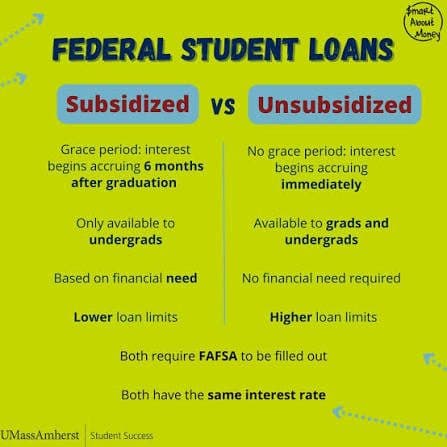
But they do not treat interest in the same way.
Direct Subsidized Loans
Direct Subsidized Loans are available to eligible undergraduate students with financial need.
The federal government pays the interest while the student is enrolled at least half-time, during the six-month grace period after the student leaves school, and during qualifying deferment periods.
That subsidy makes these loans especially valuable.
The student is borrowing money.
But interest does not ordinarily accumulate against the student during those protected periods.
Direct Unsubsidized Loans
Direct Unsubsidized Loans are available to eligible undergraduate students without requiring the student to demonstrate financial need.
But interest begins accumulating after the loan is disbursed.
The student may not be required to make payments while enrolled.
However, the interest continues to grow.
If the student does not pay the interest during college, the accumulated interest can increase the total amount the student ultimately repays.
“Payments are not required yet” does not mean “the loan is not costing anything yet.”
That distinction is essential.
Federal Undergraduate Loan Limits
Federal student loans have annual limits.
A college cannot simply offer an unlimited federal loan because the family has a large financial gap.
For a dependent undergraduate student, the combined annual Direct Subsidized and Unsubsidized Loan limits are generally:
$5,500 in the first year, with no more than $3,500 subsidized.
$6,500 in the second year, with no more than $4,500 subsidized.
$7,500 in the third year and beyond, with no more than $5,500 subsidized.
The total dependent-undergraduate limit is generally $31,000, of which no more than $23,000 may be subsidized.
Independent undergraduate students, and certain dependent students whose parents cannot obtain a Parent PLUS Loan, may qualify for higher combined limits:
$9,500 in the first year.
$10,500 in the second year.
$12,500 in the third year and beyond.
The total undergraduate limit for this category is generally $57,500, with no more than $23,000 subsidized.
These limits can surprise families.
Imagine that a first-year student has a $28,000 remaining cost after grants and scholarships.
The student may receive only $5,500 in federal Direct Loans.
That leaves $22,500.
The FAFSA does not automatically produce another $22,500 in federal student loans for the student.
The family must find another solution.
That solution might include:
additional scholarships,
a financial-aid appeal,
family savings,
current income,
a college payment plan,
student earnings,
a Parent PLUS Loan,
a private student loan,
or a less expensive college.
This is where the federal-versus-private comparison becomes real.
Current Federal Interest Rates
Federal student loan rates are fixed for the life of each loan.
The rate changes for new loans from year to year, but once a particular loan is disbursed, its rate normally does not change.
For Direct Loans first disbursed from July 1, 2026, through June 30, 2027, the fixed rates are:
6.52 percent for undergraduate Direct Subsidized and Direct Unsubsidized Loans.
8.07 percent for graduate or professional Direct Unsubsidized Loans.
9.07 percent for Direct PLUS Loans issued to parents and eligible graduate or professional students.
Federal loans may also carry an origination fee.
The fee is deducted from the amount delivered to the school even though the borrower remains responsible for repaying the full amount borrowed.
This means a family should not evaluate a loan only by its interest rate.
It should examine:
the interest rate,
the origination fee,
the repayment period,
the monthly payment,
the total amount repaid,
and the protections provided if the borrower experiences financial hardship.
A loan with a slightly lower interest rate is not automatically the safer loan.
The Parent PLUS Loan Is the Parent’s Debt
A Parent PLUS Loan is a federal loan taken out by an eligible parent to help pay for the education of a dependent undergraduate student.
The parent is the borrower.
The student is not legally responsible for repaying the Parent PLUS Loan merely because the money was used for the student’s education.
Families sometimes create an informal understanding that the student will repay the loan after graduation.
But the federal government’s legal agreement is with the parent.
If the student does not pay the parent, changes careers, attends graduate school, becomes unemployed, or simply refuses to follow the family agreement, the parent remains responsible.
This is why the Parent PLUS decision should not be treated as a temporary administrative step.
It is a parent retirement decision.
It is a parent cash-flow decision.
It is a parent credit decision.
And it may become a parent estate-planning decision.
The New Parent PLUS Limits
Beginning July 1, 2026, new limits apply to many parents borrowing Parent PLUS Loans for students beginning a new course of study or otherwise not qualifying for the transition exception.
For affected families, the combined Parent PLUS borrowing by all parents on behalf of one dependent student generally cannot exceed:
$20,000 per academic year.
$65,000 in total for that dependent student’s undergraduate education.
The aggregate limit applies regardless of amounts previously repaid, forgiven, or discharged.
Certain students and parents may qualify for a temporary exception when the student was enrolled in the same program by June 30, 2026, and a Direct Loan had already been made for that program before July 1, 2026. Under the exception, prior limits may continue during the student’s defined expected time to credential, generally for no more than three academic years.
This is one of the most consequential changes for families considering expensive colleges.
Before July 1, 2026, eligible parents could generally borrow up to the college’s cost of attendance minus other financial aid.
That allowed some families to use Parent PLUS Loans to cover very large annual gaps.
For many new borrowers, that option is now capped.
Consider a hypothetical first-year student with a $31,000 remaining annual balance.
The student accepts the maximum $5,500 dependent first-year Direct Loan.
The remaining balance is $25,500.
The parents may be limited to $20,000 in Parent PLUS borrowing.
The family still has a $5,500 gap.
That gap may lead the family toward a private loan.
Or it may force a more difficult question:
Is this college financially sustainable?
The new cap may protect some families from borrowing amounts they cannot reasonably repay.
But it may also push families toward private credit markets, larger cash contributions, or lower-cost colleges.
The rule does not make the remaining tuition bill disappear.
It changes where the family may need to look for the money.
What Is a Private Student Loan?
A private student loan is a nonfederal education loan offered by a private lender.
The lender may be:
a bank,
a credit union,
a state-affiliated organization,
an online lender,
a nonprofit lender,
or another financial institution.
The terms are established by the lender rather than by the federal student loan program.
Private lenders may examine:
the borrower’s credit history,
credit score,
income,
existing debt,
school,
degree program,
expected graduation date,
and the credit and income of a cosigner.
Many high school students have limited income and little or no established credit history.
As a result, they frequently need a parent, guardian, or another creditworthy adult to cosign.
A cosigner is not merely a reference.
A cosigner is legally responsible for the debt if the primary borrower does not pay.
The loan may appear on the cosigner’s credit record.
Late payments may affect both parties.
A default may expose both parties to collection activity.
Some lenders offer cosigner release after the student makes a required number of qualifying payments and independently meets the lender’s credit standards.
But release is not always automatic.
The student may need to apply.
The lender may deny the request.
And until the release is completed, the cosigner remains responsible.
Fixed Rates and Variable Rates
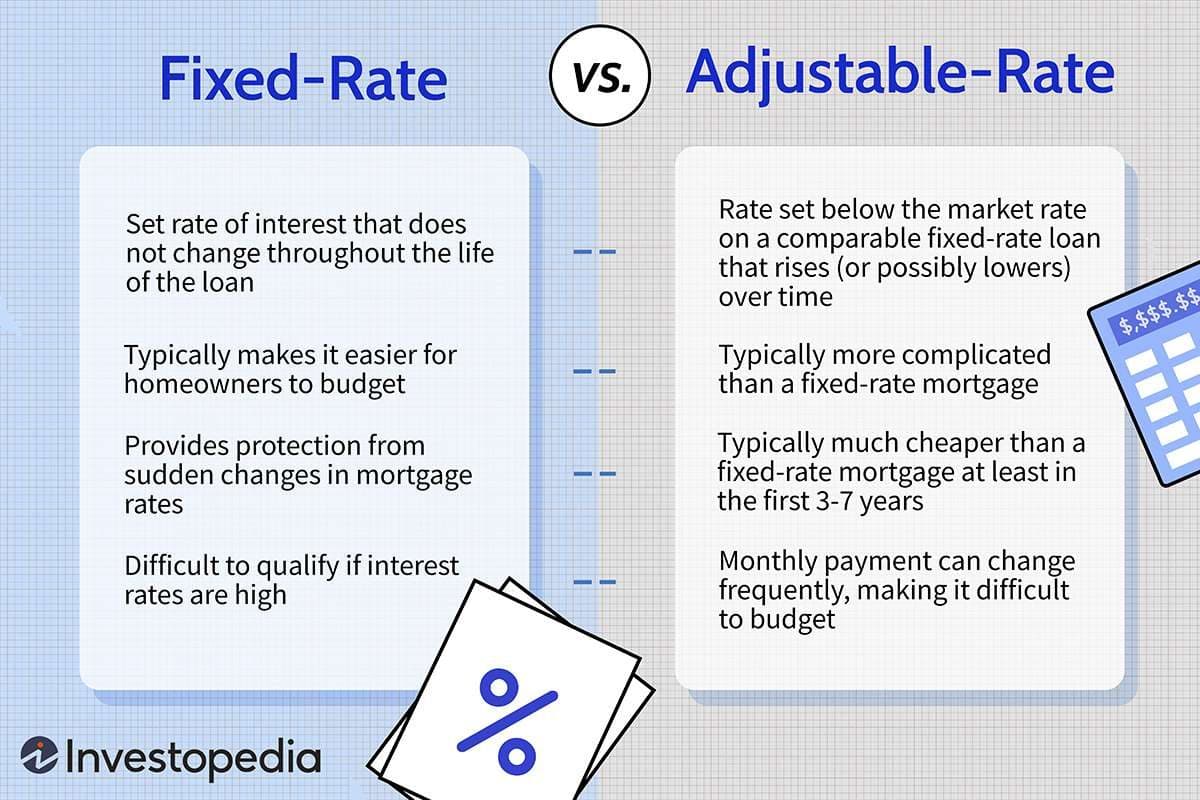
Private student loans may offer fixed or variable interest rates.
A fixed private rate normally remains the same for the life of the loan.
A variable rate may change as the lender’s reference index changes.
A variable rate may begin lower than a fixed rate.
That lower starting number can be attractive.
But if market rates increase, the borrower’s rate and monthly payment may also increase.
The family must ask:
Is this the rate for the entire loan?
Or only the starting rate?
Is the rate fixed?
Is it variable?
How often can it change?
Is there a maximum rate?
What credit profile is required to receive the advertised rate?
The lowest rate displayed in an advertisement may be available only to borrowers with excellent credit, strong income, a qualified cosigner, automatic payments, or particular repayment terms.
The student’s actual approved rate may be much higher.
Federal Direct Loans provide fixed interest rates and do not base the undergraduate student’s rate on the student’s credit score.
Private loans price the risk of the individual borrower and cosigner.
Federal Loans: The Advantages
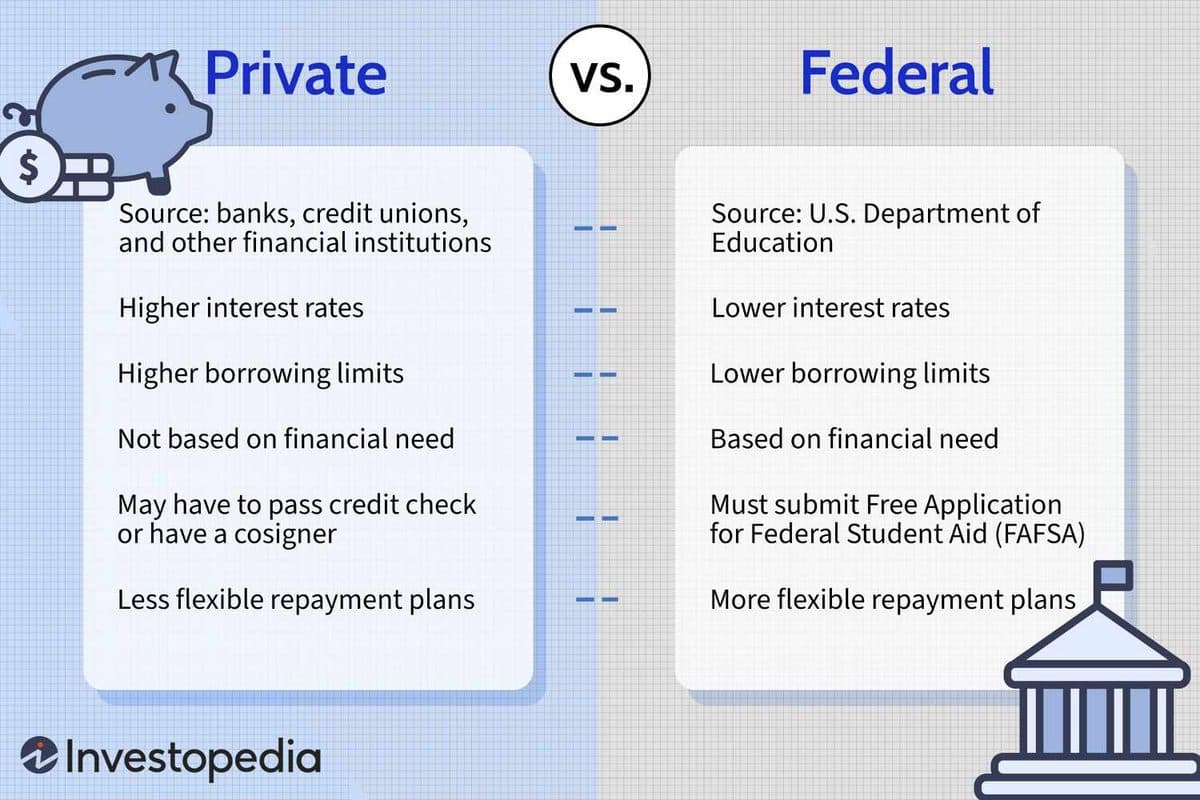
Federal student loans are usually the first borrowing option families should consider.
No Traditional Credit Underwriting for Direct Student Loans
Direct Subsidized and Direct Unsubsidized Loans generally do not require a credit check.
A student does not need a long credit history or a parent cosigner to receive them.
PLUS Loans are different because they involve a review for adverse credit history.
Fixed Interest Rates
The rate on a federal Direct Loan is fixed for the life of the loan.
The borrower knows that the rate will not increase because of changes in the market.
Subsidized Interest for Eligible Students
Students with financial need may qualify for Direct Subsidized Loans, under which the government pays interest during certain periods.
Private student loans generally do not provide a comparable federal interest subsidy.
More Flexible Repayment Options
Federal loans may provide access to repayment plans based on income.
They may also provide deferment, forbearance, rehabilitation, consolidation, and forgiveness options when eligibility requirements are met.
The exact programs depend on the loan type and disbursement date.
Public Service Loan Forgiveness
Eligible federal Direct Loan borrowers working full-time for qualifying government or nonprofit employers may receive forgiveness of the remaining balance after satisfying the equivalent of 120 qualifying monthly payments under an accepted repayment plan.
Private student loans do not qualify for federal Public Service Loan Forgiveness.
Death and Disability Protections
Federal student loans may be discharged when the borrower dies or qualifies for total and permanent disability discharge.
Private lenders are not universally required to provide the same discharge treatment, and the outcome may depend on the loan contract, state law, borrower, and cosigner arrangement.
A Federal Safety Net
The most important federal-loan advantage may not be the interest rate.
It may be the existence of a system.
A federal borrower who loses employment may have repayment-plan options.
A public-service worker may have a forgiveness path.
A borrower with a permanent disability may have a discharge path.
A borrower in default may have a rehabilitation path.
The federal system can be complex.
It can change.
It can be frustrating.
But the borrower is not relying only on the goodwill of one private lender.
Federal Loans: The Disadvantages
Federal loans are not automatically harmless.
The Interest Rate May Not Be the Lowest Available
A borrower or cosigner with excellent credit may receive a private fixed-rate offer below the current federal rate.
This may be especially relevant when comparing a high-rate Parent PLUS Loan with a competitively priced private loan.
But the rate comparison must include the value of federal protections.
Origination Fees
Federal loans may charge origination fees.
The borrower repays the full loan amount even though the amount disbursed is reduced by the fee.
Undergraduate Borrowing Is Limited
Federal Direct Loan limits may cover only a small percentage of the total cost at an expensive college.
Federal student loans may be the best first loan without being sufficient to pay the bill.
Parent PLUS Loans Can Be Expensive
Parent PLUS Loans may carry higher interest rates and higher origination fees than undergraduate Direct Loans.
The parent may also have fewer income-driven repayment options than a student borrower.
Under the new rules, Parent PLUS eligibility and repayment options require especially careful review.
Federal Collection Powers Are Strong
Borrowers who default on federal loans may face serious consequences, including collection costs and possible administrative collection actions permitted by federal law.
Federal protections should not be confused with permission to ignore the debt.
Private Loans: The Possible Advantages
Private loans are not automatically predatory.
They may serve a legitimate purpose when a student has exhausted lower-cost and safer options.
Potentially Lower Interest Rates
A student with strong credit, or a student applying with a highly qualified cosigner, may receive a private fixed rate below the applicable federal rate.
This can reduce interest costs when the loan is repaid as scheduled.
Flexible Product Choices
Private lenders may offer several repayment terms.
A borrower may be able to choose:
a shorter term with higher monthly payments,
a longer term with lower monthly payments,
immediate repayment,
interest-only payments while in school,
small fixed in-school payments,
or deferred repayment.
Availability varies by lender.
No Federal Origination Fee on Some Products
Some private student loans advertise no origination fee.
That can make the initial cost appear more attractive than a federal PLUS Loan carrying both a high interest rate and an origination fee.
Filling a Legitimate Remaining Gap
A private loan may help a family cover a relatively small, temporary gap after grants, scholarships, savings, student federal loans, and other resources have been used.
The danger grows when private borrowing is not filling a small gap.
It is financing an unaffordable college year after year.
Private Loans: The Risks
Credit Approval Is Required
The student or cosigner must satisfy the lender’s underwriting standards.
A weaker credit profile may result in:
a higher interest rate,
a smaller approved amount,
a requirement for a cosigner,
or a denial.
Variable Rates Can Increase
A variable-rate loan may become more expensive over time.
The family should calculate whether it could still afford the payment if the rate rises.
Cosigners Are Fully Responsible
A parent may believe:
“This is my child’s loan.”
But when the parent cosigns, it is also the parent’s legal obligation.
The lender may pursue the cosigner when the student fails to pay.
Repayment Protections Vary
Private lenders may offer temporary hardship assistance, reduced payments, deferment, or forbearance.
But these options are established by the lender and loan contract.
They may be more limited than federal programs.
The borrower should never assume that a private lender will reduce the payment based on income simply because federal loans can do so.
No Federal Income-Driven Repayment
Private student loans do not qualify for federal income-driven repayment plans.
The monthly payment generally depends on the loan balance, interest rate, term, and lender agreement rather than the borrower’s current income.
No Federal PSLF
Private loans do not qualify for Public Service Loan Forgiveness.
A student planning to work in education, government, nonprofit service, public health, or another qualifying public-service field should consider the value of retaining federal loan eligibility.
Refinancing Can Permanently Remove Federal Benefits
A borrower may refinance federal student loans with a private lender to obtain a lower rate.
But once federal loans are refinanced into a private loan, they are no longer federal loans.
The borrower may permanently lose access to:
federal income-driven repayment,
federal deferment and forbearance rules,
federal forgiveness programs,
federal rehabilitation,
and federal discharge protections.
A lower rate can be valuable.
But the borrower is exchanging protections for price.
That exchange should be intentional.
Parent PLUS Versus a Private Loan
The Parent PLUS-versus-private-loan decision is more complicated than the federal-student-loan-versus-private-loan decision.
For an undergraduate student, Direct Subsidized and Unsubsidized Loans are generally the preferred first borrowing source.
But after those student limits are reached, the family may be comparing:
a Parent PLUS Loan in the parent’s name,
with a private student loan in the student’s name and cosigned by the parent,
or a private parent loan in the parent’s name.
These are not equivalent.
With a Parent PLUS Loan:
the parent is the federal borrower,
the parent receives federal terms applicable to that loan,
the student is not legally responsible to the government,
and the loan may carry a higher federal rate and origination fee.
With a cosigned private student loan:
the student is generally the primary borrower,
the parent is also legally responsible as cosigner,
the lender uses credit-based underwriting,
and repayment protections depend on the contract.
With a private parent loan:
the parent is the borrower,
the student may have no legal responsibility,
and the rate and terms depend on the parent’s credit profile and lender.
The family should ask two separate questions.
First:
Which product offers the best financial terms?
Second:
Who should legally carry the debt?
A family may find a lower private rate.
But if the private loan places the debt on the student and the Parent PLUS Loan places it on the parent, the family is not merely comparing rates.
It is deciding whose future financial life will carry the obligation.
A Lower Rate Does Not Always Mean a Better Loan
Consider a simplified example.
A family borrows $20,000 over a 10-year repayment period.
At a fixed rate of 6.52 percent, the payment would be approximately $227 per month, and total payments would be approximately $27,276.
At a fixed rate of 9.07 percent, the payment would be approximately $254 per month, and total payments would be approximately $30,493.
At a fixed rate of 10.5 percent, the payment would be approximately $270 per month, and total payments would be approximately $32,384.
These examples assume ordinary level-payment amortization, no fees, no missed payments, and no special repayment benefits.
The differences matter.
But the comparison remains incomplete.
Suppose the 6.52 percent loan is federal and qualifies for an income-based repayment plan if the graduate’s earnings are low.
Suppose the 9.07 percent loan is a Parent PLUS Loan that legally belongs to the parent.
Suppose the 10.5 percent loan is private, variable, and cosigned by the parent.
Now the decision involves:
rate risk,
employment risk,
family responsibility,
repayment flexibility,
forgiveness eligibility,
and legal ownership of the debt.
The number in the interest-rate box is only one part of the loan.
The New Repayment Assistance Plan
Federal student loan repayment changed significantly beginning July 1, 2026.
A new income-driven option called the Repayment Assistance Plan, or RAP, is now available to eligible Direct Loan borrowers.
Borrowers whose eligible Direct Loans were all first disbursed before July 1, 2026, may choose RAP.
For many borrowers with at least one Direct Loan first disbursed on or after July 1, 2026, RAP is the only available income-driven repayment plan.
Parent PLUS Loans and consolidation loans containing Parent PLUS debt are generally not eligible for RAP.
Under RAP, the monthly payment is based on a sliding percentage of adjusted gross income.
The percentage ranges from 1 percent to 10 percent, depending on income.
A borrower’s monthly payment is reduced by $50 for each dependent claimed on the borrower’s federal tax return.
The minimum payment is generally $10 per month.
When the borrower makes the required payment on time, remaining monthly interest not covered by the payment is waived.
The plan also includes a principal-payment benefit under which the government can contribute enough to ensure that the principal is reduced by up to $50, subject to the program’s rules.
Any remaining balance may be eligible for forgiveness after 30 years of qualifying repayment, and qualifying RAP payments may count toward Public Service Loan Forgiveness when the other PSLF requirements are met.
RAP may help borrowers avoid a balance that continually grows because the monthly payment does not cover the interest.
But it should not be described as automatic free money.
Borrowers must remain eligible.
They must provide or authorize access to required income information.
Payments may rise when income rises.
The repayment period may last decades.
And forgiveness can have tax consequences depending on the law in effect when forgiveness occurs.
The New Tiered Standard Plan
The second major repayment option introduced for new federal borrowers is the Tiered Standard Plan.
For Direct Loans first disbursed on or after July 1, 2026, borrowers who do not select another eligible plan may be automatically placed into Tiered Standard repayment.
The plan uses fixed monthly payments and assigns a repayment period based on the amount borrowed.
The repayment period may be 10, 15, 20, or 25 years.
A longer term can reduce the monthly payment.
But it can also increase the total interest paid over the life of the loan.
This creates another important distinction between affordability now and affordability over time.
A $350 monthly payment may be easier to manage than a $500 payment.
But if the lower payment extends repayment by many years, the borrower may pay considerably more interest.
The family should always compare:
the monthly payment,
the repayment term,
and the total projected repayment.
A lower monthly payment is not the same as a lower-cost loan.
Changes Beginning in 2027
Additional federal borrower rules are scheduled to change on July 1, 2027.
For Direct Loans made on or after that date, unemployment deferment and economic-hardship deferment are scheduled to be eliminated.
Borrowers with loans made before July 1, 2027, retain those deferment benefits for the applicable earlier loans.
General forbearance for newer loans will also be limited to no more than nine months within a 24-month period.
At the same time, borrowers in default will gain another opportunity.
Beginning July 1, 2027, a borrower may be permitted to rehabilitate the same defaulted federal loan up to two times over the loan’s lifetime rather than only once.
Loan rehabilitation generally requires the borrower to make a series of voluntary, reasonable, and affordable payments under the program rules.
These changes move in opposite directions.
One change provides a second path out of default.
Other changes reduce certain options for temporarily pausing payments.
Future borrowers should not assume that the hardship protections described by an older sibling, parent, counselor, or graduate will apply to every new loan they receive.
The disbursement date matters.
Changes Scheduled for 2028
The federal repayment system is also scheduled to become more limited by July 1, 2028.
Existing borrowers enrolled in certain older income-driven plans, including PAYE and ICR, are expected to transition to another eligible repayment plan.
Depending on their loan history, borrowers may need to choose among RAP, Income-Based Repayment, or an eligible fixed-payment plan.
This does not mean that every borrower should immediately change plans.
It means borrowers should pay attention to official communications from Federal Student Aid and their loan servicers.
A repayment strategy should not be created once and ignored for 20 years.
The borrower must review it as:
income changes,
family size changes,
employment changes,
loan rules change,
and forgiveness eligibility changes.
Workforce Pell Has Arrived
The 2026 changes also expanded Pell Grant access to certain short-term workforce programs.
Beginning July 1, 2026, approved Workforce Pell programs can include eligible training programs as short as eight weeks.
However, a short program does not automatically qualify.
The program must pass the required state and federal approval process before students can use Pell Grant funds for it.
This expansion may benefit students pursuing:
technical education,
industry credentials,
workforce training,
and shorter career-focused programs.
It also changes the traditional assumption that federal grant assistance is useful only for two-year or four-year degrees.
But families must verify that:
the school is eligible,
the specific program is approved,
the credential has employment value,
the total cost is reasonable,
and the program has strong completion and placement outcomes.
Shorter does not automatically mean better.
Eligible does not automatically mean valuable.
A student should not borrow thousands of dollars for a credential without understanding what jobs it leads to.

Some Rules Remain Uncertain
Not every announced policy remains untouched after it is published.
As of July 2026, Federal Student Aid reported that a federal court had temporarily stayed part of the Department of Education’s definition of which programs qualify as professional degrees for purposes of the new graduate and professional loan limits.
That means the classification of certain programs may remain subject to litigation and further guidance.
Students considering graduate or professional education should confirm their classification and borrowing limits directly with the institution’s financial-aid office rather than relying on a general online summary.
This is an important lesson for all financial-aid planning.
There is a difference between:
a proposal,
a law,
a final regulation,
an effective rule,
and a rule affected by litigation.
Families should not make a major borrowing decision based on a headline describing what “may happen.”
They should verify what is legally in effect for the student’s specific loan and enrollment period.
How a Family Should Compare Federal and Private Loans
The comparison should begin only after the college’s true remaining cost is known.
Step One: Separate Free Aid From Debt
Identify:
grants,
scholarships,
tuition discounts,
and other assistance that does not normally need to be repaid.
Do not count a loan as a scholarship.
Do not count work-study as money already received.
Step Two: Calculate the Real Annual Gap
Start with the full cost of attendance.
Subtract grants and scholarships.
Subtract a realistic family contribution.
Subtract available savings.
Subtract student earnings that can reasonably be used without harming academic performance.
The result is the potential borrowing gap.
Step Three: Accept Subsidized Federal Loans First
When available, Direct Subsidized Loans are usually the most favorable borrowing option because of their federal interest subsidy and repayment protections.
Step Four: Evaluate Unsubsidized Federal Loans
Students should normally consider Direct Unsubsidized Loans before private loans.
But they should understand that interest begins accumulating after disbursement.
Step Five: Question the Remaining Gap
Before the family chooses Parent PLUS or private loans, it should ask:
Can the college provide additional grant assistance?
Has the family submitted a financial-aid appeal?
Are there departmental scholarships?
Can the student become a resident assistant in a later year?
Is there a less expensive housing option?
Can the student begin at a lower-cost institution?
Is the student likely to graduate in four years?
What happens if the cost rises by 4 or 5 percent annually?
What happens if the family’s income falls?
A loan should not prevent the family from questioning the price.
Step Six: Compare Parent PLUS and Private Offers Side by Side
The family should record:
borrower name,
cosigner name,
fixed or variable rate,
annual percentage rate,
origination fee,
in-school payment requirement,
grace period,
repayment term,
estimated monthly payment,
estimated total repayment,
hardship options,
death and disability policy,
cosigner-release policy,
late-payment consequences,
and eligibility for federal repayment or forgiveness programs.
Step Seven: Read the Promissory Note
The advertisement is not the loan.
The prequalification page is not the loan.
The lender representative’s explanation is not the loan.
The promissory note is the loan agreement.
That document controls the obligation.

The Maximum Approval Is Not a Recommendation
A lender may approve a family for a large amount.
A college may certify that the amount does not exceed the student’s cost of attendance.
Neither fact means the family should borrow the full amount.
Approval answers one question:
“Will the lender provide this money?”
It does not answer:
“Can the borrower safely repay this money?”
The family must answer that question independently.
A useful starting guideline is to compare the student’s expected total debt at graduation with a realistic first-year salary in the student’s field.
But even that guideline is incomplete.
A $55,000 salary does not feel the same in every city.
It does not produce the same take-home pay in every state.
It does not account for:
graduate-school plans,
housing costs,
health insurance,
transportation,
family responsibilities,
retirement savings,
or career uncertainty.
Borrowing should be based on a conservative employment scenario.
Not the highest salary shown on a career website.
The Four-Year Calculation
Families frequently focus on the first-year financial-aid offer.
But college is usually a multiyear commitment.
A first-year private loan of $12,000 may seem manageable.
But if the family borrows:
$12,000 during the first year,
$15,000 during the second year,
$18,000 during the third year,
and $20,000 during the fourth year,
the student or parent may leave college with $65,000 in private debt in addition to federal loans.
The first-year scholarship may not increase when tuition increases.
Housing costs may rise.
Travel costs may rise.
The student may lose an award by falling below the required GPA.
A fifth year may become necessary.
The family must calculate the probable total cost through graduation.
Not merely the amount due this August.
Questions Students Should Ask Before Cosigning With a Parent
A student should ask:
Whose name is on the loan?
Does the loan appear on both credit reports?
When does repayment begin?
Will I make payments while in school?
Is the rate fixed or variable?
How much will the payment be after graduation?
What happens if I attend graduate school?
What happens if I become unemployed?
What happens if I become disabled?
What happens if the cosigner dies?
What happens if I die?
Can the cosigner be released?
How many payments are required before release?
What credit standards must I meet at that time?
Does refinancing remove any existing benefits?
These questions may feel uncomfortable.
But financial discomfort before borrowing is safer than family conflict after borrowing.
Questions Parents Should Ask Themselves
Parents should ask:
Will this borrowing delay retirement?
Will it reduce emergency savings?
Will it require borrowing against the home?
Can we make the payments if our child cannot contribute?
Can we make the payments if one parent loses a job?
Are we borrowing for one child while still needing to educate another?
Are we relying on annual bonuses or stock compensation that may not continue?
Will the monthly payment interfere with medical, housing, or caregiving responsibilities?
Would we still select this college if we could not borrow?
That final question is revealing.
If the college appears affordable only because a lender is willing to finance it, the college may not actually be affordable.
When a Private Loan May Be Reasonable
A private student loan may be reasonable when:
the student has completed the FAFSA,
the student has accepted appropriate grants and scholarships,
the student has used available federal Direct Loans,
the remaining gap is limited,
the family has compared several lenders,
the rate is competitive and fixed,
the repayment plan is clear,
the degree has a strong likelihood of completion,
the anticipated debt is manageable relative to realistic earnings,
and the family understands the loss of federal protections.
A private loan becomes more dangerous when:
it is used to cover a very large annual gap,
the student is uncertain about the degree,
the college has weak graduation outcomes,
the loan uses a variable rate the family cannot absorb,
the parent does not understand cosigner responsibility,
the family assumes future refinancing is guaranteed,
or the plan depends on the student receiving a very high salary immediately after graduation.
Private borrowing should solve a carefully measured gap.
It should not postpone an affordability problem.
The Most Important College List May Be the Financial List
Families build college lists using admission categories:
Reach.
Target.
Likely.
But they should also create borrowing categories:
No-loan or low-loan options.
Manageable federal-loan options.
Options requiring parent borrowing.
Options requiring private borrowing.
Financially unrealistic options.
A college may be an academic target and a financial reach.
Another may be an academic likely and a financial safety.
A highly selective private college may provide enough need-based aid to become affordable.
An out-of-state public university may provide very little assistance and require substantial borrowing.
The list should contain at least one college the family can afford without relying on:
a large private loan,
an uncertain scholarship,
a future financial-aid appeal,
or a parent’s ability to work many years beyond the planned retirement age.
A responsible college list should produce choices.
Not a single acceptance letter attached to an impossible loan.
The Goal Is Not to Avoid Every Loan
Student loans are not automatically a failure.
A reasonable amount of debt can help a student obtain an education that would otherwise be inaccessible.
Federal loans can provide flexibility.
A carefully chosen private loan can close a limited gap.
A Parent PLUS Loan can help a family manage costs when the parent has the income and long-term capacity to repay.
The goal is not necessarily to graduate with zero debt.
The goal is to graduate with debt that does not control the graduate’s life.
Debt that does not force the student to abandon a meaningful career.
Debt that does not require the parent to sacrifice financial security.
Debt that does not turn every job decision, housing decision, marriage decision, or family decision into a loan-payment calculation.
The family should not ask only:
“What is the monthly payment?”
It should ask:
“How long will this payment exist?”
“What other goals will it delay?”
“What happens if life does not go according to plan?”
The New Definition of a Good Loan Decision
A good loan decision is not the loan with the most attractive advertisement.
It is not the loan with the lowest starting payment.
It is not the loan that receives approval fastest.
It is the loan that fits into a larger college-financing strategy.
That strategy begins with grants and scholarships.
It includes the FAFSA.
It considers federal student loans first.
It examines Parent PLUS and private loans carefully.
It identifies the legal borrower.
It calculates four-year costs.
It tests the payment against realistic income.
It understands what protections will exist if repayment becomes difficult.
And it leaves the family with enough financial flexibility to live beyond the college bill.
Because college is an investment.
But not every college price produces a good return.
Not every loan creates opportunity.
And not every approval should be accepted.
The smartest family does not ask only:
“How can we find enough money to attend this college?”
It asks:
“What will this education cost after interest, who will carry the debt, what protections will remain, and will the degree still be worth the obligation when repayment begins?”
That is the calculation that matters.
Because admission opens the door.
Financial aid may help the student cross the threshold.
But responsible borrowing determines how much freedom the student and family will have after graduation.
Editor’s note: This article reflects federal student-aid information available as of July 22, 2026. Interest rates, grant amounts, loan limits, repayment plans, court orders, and eligibility requirements can change. Students and families should verify current rules directly with Federal Student Aid, the college’s financial-aid office, and the applicable private lender before accepting or refinancing any loan.