
Full ACT Guide
From First Diagnostic to Final Composite — A Month-by-Month ACT Preparation Roadmap From 10th Grade Through 12th Grade
Written By DCP Blog Content Management Intern Abhi Kandi · on July 25th, 2026 · 40 min read

Table of Contents
They say students should begin preparing for the ACT early.
The advice appears everywhere.
In counseling meetings.
In parent conversations.
In tutoring advertisements.
In discussions about college lists, scholarships, junior-year schedules, and application deadlines.
But “start early” can mean very different things to different families.
Some parents believe a student should begin completing full-length ACT examinations in ninth or tenth grade.
Some students purchase several preparation books, complete the opening chapters, and then leave the books untouched for months.
Others wait until the spring of eleventh grade and suddenly discover that ACT preparation must compete with AP examinations, final projects, extracurricular commitments, summer applications, and the beginning of college planning.
Neither extreme is necessary.
A tenth grader does not need to spend every Saturday taking a four-hour examination.
A twelfth grader should not be learning the structure of the ACT for the first time a few weeks before an application deadline.
Effective ACT preparation is not built around panic.
It is built around progression.
In tenth grade, the student should understand the examination and strengthen the academic foundations it measures.
In eleventh grade, the student should move from general skill development to focused preparation and complete the first official ACT attempt.
By twelfth grade, the student should know whether the score supports the college list, whether another attempt is necessary, and exactly what must improve.
That is the difference between studying for the ACT and managing the ACT.
Studying means answering questions.
Managing means understanding the score, the timeline, the pacing requirements, the weak areas, the available testing dates, the college expectations, and the recovery plan.
The goal is not simply to take the ACT.
The goal is to reach the strongest reasonable score without allowing one examination to consume the student’s entire high school experience.

Understanding the Enhanced ACT
Before building a preparation schedule, students should understand the examination they are preparing to take.
The current ACT contains three required multiple-choice sections:
English.
Mathematics.
Reading.
Students may also choose an optional Science section and an optional Writing section for National Saturday testing. The required English, Math, and Reading sections produce the ACT Composite score. Science is reported separately and can contribute to a STEM score when taken, while Writing can contribute to an ELA score.
The required ACT sections are currently structured as follows:
English contains 50 questions and allows 35 minutes.
Math contains 45 questions and allows 50 minutes.
Reading contains 36 questions and allows 40 minutes.
The optional Science section contains 40 questions and allows 40 minutes.
The optional Writing section provides one essay prompt and allows 40 minutes.
A student who takes only English, Math, and Reading completes 125 minutes of required testing before breaks and administrative time.
This is important because many older ACT preparation books, websites, and videos describe the previous ACT structure.
The examination has changed.
The scoring scale has not.
ACT section scores and the Composite score continue to use the familiar 1–36 scale, but the current Composite is calculated using English, Math, and Reading rather than all four traditional multiple-choice sections.
Students should therefore make sure that their preparation resources reflect the enhanced ACT.
A book can contain excellent grammar instruction.
It can contain useful algebra questions.
It can contain strong reading passages.
But if its practice examinations use the old number of questions, outdated timing, five Math answer choices, or an old Composite calculation, it may not accurately prepare the student for the current testing experience.
Preparation should match the examination the student will actually take.
Should the Student Take ACT Science?
The optional Science section creates a new planning decision.
Some students may immediately decide to skip it because it does not enter the current Composite score.
That decision may be reasonable.
But it should not be automatic.
Students interested in engineering, biology, chemistry, medicine, environmental science, data science, or other STEM-related fields may want the opportunity to demonstrate scientific reasoning and receive a STEM score.
Some colleges, scholarships, state programs, school-day administrations, or specialized academic pathways may also have their own expectations.
ACT advises students to review the requirements of the institutions they are considering because colleges and universities may use ACT components differently.
Science on the ACT is not primarily a test of memorized scientific facts.
It measures the ability to interpret graphs, analyze experiments, identify relationships, evaluate evidence, and reason from scientific information.
A student who performs well with charts, tables, experimental design, and evidence-based reasoning may find that Science strengthens the testing profile.
A student who does not need a Science score and would benefit from a shorter testing experience may decide not to take it.
The decision should be based on the college list.
The intended academic direction.
The student’s strengths.
The specific testing program.
And the current institutional requirements.
Not convenience alone.

Should the Student Take ACT Writing?
Writing is also optional for National Saturday testing.
The essay does not change the Composite score.
However, students should check whether any college, scholarship, state program, or special opportunity on the list requests or considers the ACT Writing score.
A student should not add the essay simply because it makes the examination feel more complete.
A student should not skip it simply because it is optional.
The correct question is:
Will this section serve a clear purpose?
If the answer is yes, prepare for it.
If the answer is no, the student may be better served by protecting energy for the required sections.
The ACT Is Not the SAT With Different Numbers
Families sometimes treat the SAT and ACT as interchangeable examinations.
They are both college admissions tests.
They measure overlapping academic skills.
Colleges that accept standardized testing generally accept either one.
But the testing experiences are different.
The ACT follows a fixed section structure rather than changing difficulty during the examination. Current ACT materials describe the test as predictable from beginning to end, without mid-test adaptive difficulty changes.
The ACT also places substantial pressure on pacing.
Students must move quickly through English passages.
They must manage a broad range of Math concepts.
They must read and answer passage-based questions efficiently.
Students who choose Science must interpret technical information rapidly.
A student can understand the content and still lose points because of time.
Another student may thrive on the ACT because the questions feel direct and the structure feels predictable.
That is why the ACT should not be selected based only on reputation.
It should be selected based on evidence.
The student should take an official ACT diagnostic.
The student may also take an official SAT diagnostic.
Then the family can compare:
The starting scores.
The pacing experience.
The student’s comfort.
The amount of preparation required.
And the colleges being considered.
The best test is not the one friends are taking.
It is the one that gives the student the strongest opportunity to demonstrate readiness.
The Problem With Last-Minute ACT Preparation
Last-minute preparation often produces activity without producing understanding.
The student completes hundreds of questions.
The family purchases additional books.
The student watches strategy videos at increased speed.
A new study schedule appears every few days.
But no one pauses to ask the most important question:
Why is the student losing points?
A student scoring below the target may not understand punctuation.
Another may understand grammar but spend too much time rereading English passages.
Another may know the Math concepts but struggle to recognize which method a question requires.
Another may read accurately but move too slowly through the Reading section.
Another may understand Science graphs but become overwhelmed when several figures appear together.
Another may perform well during untimed practice but lose concentration during a full examination.
These students should not follow identical preparation plans.
One needs content instruction.
One needs pacing practice.
One needs stronger question recognition.
One needs endurance.
One needs a more effective checking system.
One needs a calmer test-day routine.
A practice test reveals the score.
Careful evaluation reveals the reason.
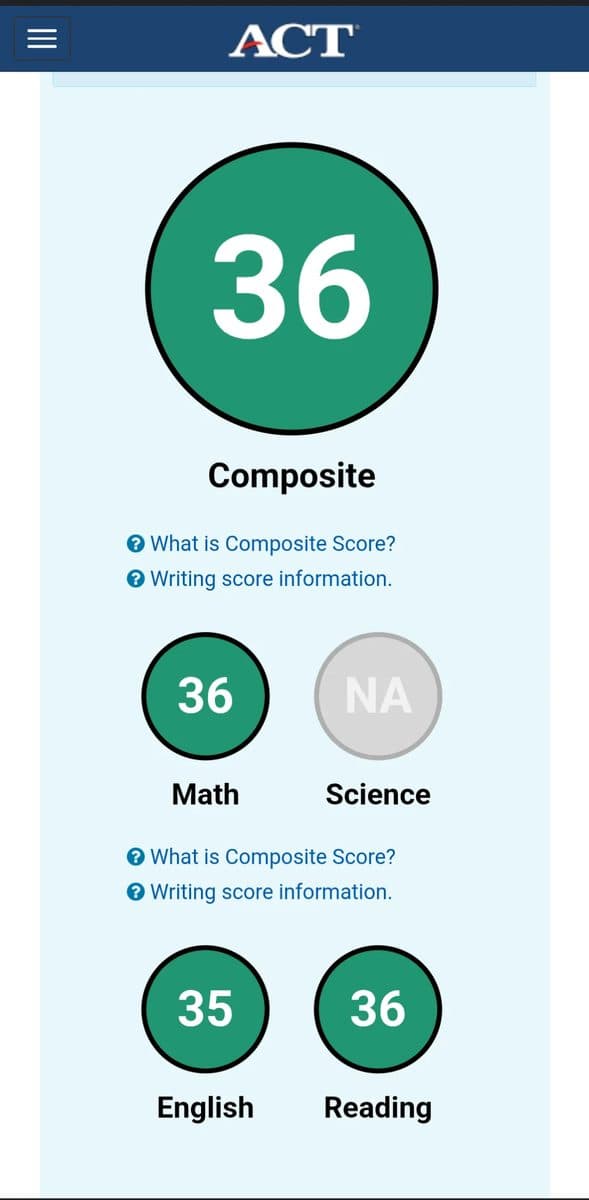
That is why preparation should begin with diagnosis rather than judgment.
A low starting score is not a final conclusion.
It is information.
General ACT Test-Taking Strategies
Before following a month-by-month schedule, students should establish habits that apply throughout the entire ACT journey.

Answer Every Question
The ACT does not deduct points for incorrect answers.
Scores are based on the number of questions answered correctly, so leaving an answer blank provides no advantage.
When time is nearly finished, the student should make sure every question contains an answer.
A guess may be correct.
A blank answer cannot be.
This does not mean students should guess immediately whenever a question appears difficult.
They should first attempt to eliminate incorrect choices.
They should compare the options.
They should use logic.
They should make the best informed selection available.
But they should not leave questions unanswered.
Accuracy Comes Before Speed
Students frequently attempt to become faster before they become accurate.
They rush through punctuation questions.
They skip algebra steps.
They skim a passage so quickly that they miss the author’s purpose.
They examine one graph but fail to notice that the question refers to another.
This creates the illusion of speed.
It does not create control.
During the early stages of preparation, students should first learn how to solve each question type correctly.
Once the method becomes reliable, they can begin reducing the time required.
Speed built without accuracy creates repeated mistakes.
Speed built upon accuracy creates efficiency.

Develop Section Pacing Checkpoints
The ACT rewards students who understand how time is being used.
A student should not wait until the final minute to discover that an entire passage remains.
Each section should have pacing checkpoints.
In English, the student can monitor progress by passage.
In Math, the student can check how many questions have been completed at several points.
In Reading and Science, the student can create time limits for each passage set.
These checkpoints should be practiced before test day.
They should not become a source of constant anxiety.
The purpose of checking time is to make a decision.
Continue.
Move faster.
Flag the question.
Make the best available choice.
Or return later.
A clock is useful when it guides behavior.
It is harmful when the student watches it instead of reading the question.
Use a Two-Pass Strategy
Some questions will be more difficult than others.
The student does not need to solve them in a perfect sequence.
On the first pass:
Answer questions that are clear and manageable.
Mark questions that require additional work.
Avoid spending several minutes on one problem while easier points remain available.
On the second pass:
Return to the marked questions.
Eliminate incorrect answers.
Use remaining time strategically.
The strongest test takers are not always students who never encounter difficulty.
They are often students who manage difficulty without losing control of the section.

English: Read for Purpose and Structure
The ACT English section asks students to revise and edit passages.
Some questions test grammar and punctuation.
Others test organization, style, clarity, relevance, and rhetorical purpose.
Students should not choose an answer only because it sounds formal.
They should ask:
Is the sentence grammatically correct?
Is it clear?
Is it concise?
Does it preserve the author’s meaning?
Does it fit the paragraph’s purpose?
Does the transition show the correct relationship?
Does the sentence belong in this location?
The shortest answer is not always correct.
The longest answer is not automatically wrong.
The best answer is the one that fulfills the exact task without creating a new problem.
Math: Recognize the Question Before Calculating
ACT Math covers material from foundational mathematics through topics that may include algebra, functions, geometry, statistics, probability, and trigonometry.
Students often begin calculating before identifying what the question is asking.
A stronger process is:
Translate the problem.
Identify the concept.
Determine what information is useful.
Choose a method.
Solve carefully.
Check whether the answer makes sense.
The calculator can assist.
It cannot decide which mathematical relationship the student should use.
Reading: Return to the Passage
ACT Reading rewards close comprehension and efficient evidence use.
Students sometimes select an answer because it sounds reasonable.
But reasonable is not enough.
The answer must be supported by the passage.
Students should learn to distinguish between:
What the passage states.
What the passage strongly implies.
What might be true in real life.
And what is unsupported.
When two choices seem possible, return to the relevant lines.
Look for evidence.
The passage is the authority.
Science: Read the Data Before Inventing an Explanation
Students sometimes become intimidated by unfamiliar scientific topics.
A passage may discuss a chemical reaction, an astronomical observation, a biological process, or a physics experiment.
The student may think:
“I have never learned this.”
But many ACT Science questions can be answered using the information provided.
Begin with:
The graph title.
The axes.
The units.
The legend.
The variables.
The direction of change.
The experimental groups.
Then read the question carefully.
Scientific background knowledge can help.
But the section primarily rewards interpretation and reasoning.
Do not create an explanation that the data does not support.
Use the Calculator Deliberately
Students taking ACT Math may use a permitted calculator, subject to ACT’s calculator policies.
The calculator should be familiar.
The student should practice with the same model intended for test day.
It can help with arithmetic, graphing, checking calculations, evaluating expressions, and comparing possible answers.
But entering every simple operation into a calculator may waste time.
The student should know when technology helps.
And when written reasoning is faster.
Maintain an ACT Error Log
Every serious ACT student should maintain an error log.
Not simply a collection of incorrect questions.
A record of why those questions were missed.
For every error, record:
The test date.
The section.
The question type.
The concept tested.
The answer selected.
The correct answer.
Why the selected answer was wrong.
Why the correct answer works.
How much time was spent.
The type of mistake.
The action required before the next test.
Mistakes can be classified into several categories.
Content error: The student did not know the concept or rule.
Recognition error: The student knew the concept but did not recognize that it applied.
Process error: The student used an unreliable or inefficient method.
Reading error: The student overlooked an important word, label, unit, or instruction.
Timing error: The student ran out of time or spent too long on one question.
Careless error: The student made an arithmetic, transcription, sign, or answer-selection mistake.
Endurance error: Performance declined later in the examination.
Anxiety error: The student abandoned a normal process because of stress.
These errors require different solutions.
A content error requires instruction.
A recognition error requires categorized practice.
A timing error requires pacing drills.
A careless error requires a checking routine.
An endurance error requires realistic full-length practice.
The student cannot correct every mistake by simply completing more questions.

Setting a Numerical ACT Target
Students often begin ACT preparation with a vague goal.
“I want a good score.”
“I want at least a decent score.”
“I want a score that helps me get into a strong college.”
These goals are understandable.
They are not measurable.
ACT scores range from 1 to 36.
The current Composite is the rounded average of the English, Math, and Reading section scores. Optional Science is reported separately and can contribute to the STEM score, while optional Writing uses its own scoring scale.
What qualifies as a strong score depends on the colleges being considered.
An ACT score of 25 may support one college list.
A score of 30 may be competitive for another.
A student considering highly selective institutions may establish a target of 33, 34, or higher.
National percentiles can provide context. For ACT tests taken from September 2025 through August 2026, a Composite score of 30 corresponded to approximately the 94th percentile, a 32 to approximately the 97th percentile, and a 34 to approximately the 99th percentile among recent ACT-tested graduates.
But percentile alone should not determine the target.
The college list should.
Step One: Create a Preliminary College List
The list does not need to be final in tenth grade.
It should include a range of possibilities:
Highly selective institutions.
Likely target institutions.
More accessible options.
In-state colleges.
Out-of-state colleges.
Public universities.
Private universities.
Colleges with strong programs in the student’s intended field.
The purpose is not to decide the student’s entire future at fifteen.
The purpose is to understand the general testing expectations connected to the current direction.
Step Two: Review Current Testing Policies
Testing policies differ.
Some institutions require an SAT or ACT score.
Some allow students to decide whether to submit one.
Some do not consider standardized test scores.
Some scholarship programs may have separate requirements.
Policies can change between admission cycles.
Students should verify information directly through each college’s official admissions website rather than relying on an old spreadsheet, social media post, or previous applicant’s experience.
ACT similarly advises students to review the individual testing expectations of the colleges and universities they are considering.
Step Three: Record the College’s Reported ACT Range
For every college that considers scores, record the reported range for recently enrolled students.
Many colleges publish a middle 50 percent range.
This commonly represents the scores between approximately the 25th and 75th percentiles of enrolled students who submitted results.
The lower number is not a guaranteed admission score.
The upper number is not a required score.
The range provides context.
A student below the range may still be admitted.
A student above the range may still be denied.
The ACT is one part of a larger application containing grades, course rigor, essays, recommendations, activities, responsibilities, accomplishments, and personal context.
Step Four: Establish Three Numerical Goals
A useful ACT plan can contain three numbers.
The Minimum Useful Score
This is the score at which submitting the ACT may begin to strengthen applications at several colleges on the list.
The Primary Target Score
This is the realistic score the student will actively pursue based on the college list, starting score, preparation time, and academic background.
The Stretch Score
This is a higher score the student may pursue if progress is strong and additional preparation does not damage grades, health, or other important commitments.
For example, imagine that a student’s preliminary colleges report ACT ranges centered around 27, 30, and 32.
The student might establish:
Minimum useful score: 28.
Primary target score: 31.
Stretch score: 33.
These numbers are not admission guarantees.
They are planning tools.
They help answer:
How large is the current score gap?
Which section is limiting the Composite?
How many months are available?
Is the student ready for an official attempt?
Should another testing date be reserved?
Without a number, improvement feels abstract.
With a number, the student can build a plan.

Break the Target Into Section Scores
Because the ACT Composite is currently based on English, Math, and Reading, students should calculate the section combination needed to reach the target.
Suppose the target Composite is 31.
A student might aim for:
English: 32.
Math: 30.
Reading: 31.
The average is 31.
Another student may have different strengths:
English: 34.
Math: 29.
Reading: 31.
That also averages to approximately 31.
The student does not need identical section scores.
The student needs a realistic combination.
This makes preparation more precise.
If English is already 33, the student may not need to spend the same amount of time there as in Math at 25.
Preparation time should follow the evidence.
The Week Before the ACT
The final week is not the time to rebuild the entire preparation plan.
It is the time to protect the preparation already completed.
Students often panic during the final days.
They complete multiple practice examinations.
They stay awake reviewing formulas.
They attempt to relearn every grammar rule.
They interpret one difficult practice passage as evidence that they are unprepared.
This usually creates exhaustion rather than improvement.
Seven Days Before
Complete the final full-length official ACT practice test approximately one week before the examination.
Use the exact section combination planned for test day.
If taking Science, include Science.
If taking Writing, include Writing.
Begin at approximately the same time as the official examination.
Sit at a desk.
Silence the phone.
Use the planned calculator.
Follow official section timing.
Take only the scheduled breaks.
The purpose is not to learn dozens of new concepts.
It is to confirm:
Pacing.
Endurance.
Section strategy.
Calculator familiarity.
Break management.
And emotional readiness.
Five to Six Days Before
Review the final practice examination carefully.
Do not merely look at the Composite.
Identify the last few high-value corrections.
Perhaps the student continues to miss sentence-boundary questions.
Perhaps Math mistakes involve functions.
Perhaps Reading performance declines on the final passage.
Perhaps Science errors occur when two experiments must be compared.
Choose a limited number of priorities.
A student cannot repair everything in five days.
But a student can reduce several repeated errors.
Three to Four Days Before
Complete short, targeted practice sets.
Avoid another exhausting full-length examination.
Review:
Important formulas.
Grammar and punctuation rules.
Common Math procedures.
Reading passage strategies.
Science graph-reading routines, when applicable.
The error log.
Complete a few questions from the highest-priority weak areas.
The purpose is precision.
Not volume.
Two Days Before
Confirm the logistics.
Review the test-center location.
Confirm transportation.
Check the admission ticket and identification requirements.
Prepare the permitted calculator.
Replace or charge calculator batteries when necessary.
Prepare pencils.
Select a familiar snack.
Review all current ACT test-day instructions.
Students should also make sure that prohibited electronic devices—including phones and smart watches—will remain turned off and out of sight during testing and breaks. ACT warns that accessing a prohibited device may result in dismissal and cancellation of the score.
The Day Before
Complete only light review.
Do not take another full-length examination.
Do not compare practice scores with friends.
Do not begin a new preparation book.
Eat familiar food.
Prepare clothing.
Set alarms.
Go to sleep at a reasonable time.
The day before the ACT should feel almost boring.
That is a good sign.
The preparation has already occurred.
Now the student is protecting it.
Creating an Effective ACT Exam Day
Test day should not require improvisation.
The student should know what to bring.
The student should know how to reach the testing center.
The student should know the section order.
The student should know the pacing checkpoints.
The student should know what to do when a difficult question appears.
Arrive With Time to Spare
Rushing into the testing center creates unnecessary stress.
Arrive early enough to handle:
Parking.
Room assignments.
Identification checks.
Seating.
Calculator questions.
And unfamiliar surroundings.
Follow the Normal Routine
Use the same calculator.
Use the same pacing checkpoints.
Use the same question-marking method.
Do not invent an entirely new strategy because the test is official.
Test day is not the day for experimentation.
It is the day to repeat the process that worked during preparation.
Do Not Let One Question Control the Section
Some questions will feel unusually difficult.
That does not mean the entire examination is going badly.
It does not mean the target score has disappeared.
It means one question is difficult.
Make the best strategic decision.
Solve it.
Mark it.
Eliminate choices.
Guess when necessary.
Return if time allows.
But do not allow one question to consume the time needed for several manageable questions.
Use the Scheduled Break
ACT provides a break after the second section. Students taking Writing also receive a brief transition before the essay. Electronic devices may not be accessed during breaks.
Stand when permitted.
Drink water.
Eat a familiar snack.
Avoid discussing questions with other students.
The completed sections are over.
The remaining sections have not yet begun.
The break should reset attention rather than extend anxiety.
Do Not Calculate the Composite During the Test
Students sometimes attempt to estimate how many questions they may have missed.
They replay an English answer during Math.
They worry about Math during Reading.
They interpret one difficult passage as evidence of a low score.
None of this helps with the question currently in front of them.
The student’s responsibility is not to predict the Composite.
It is to complete the next question.
The Month-by-Month ACT Roadmap
A strong ACT timeline should develop gradually from tenth grade through twelfth grade.
The exact schedule may vary depending on:
The student’s starting score.
Academic coursework.
School testing opportunities.
College list.
Extracurricular responsibilities.
Whether Science or Writing will be taken.
And whether the ACT or SAT is the better examination.
But the progression should remain consistent:
Foundation.
Diagnosis.
Skill development.
Timed preparation.
Official testing.
Evaluation.
Recovery when necessary.
Completion.
Tenth Grade: Foundation and Familiarity
Tenth grade should not become a year-long ACT boot camp.
It should become the year in which the examination stops being mysterious.
August: Understand the Examination
Begin by learning the current ACT structure.
Review the required English, Math, and Reading sections.
Understand that Science and Writing may be optional depending on the testing program and the student’s goals.
Review how the current Composite is calculated.
Explore official sample questions.
Do not begin by purchasing five books.
Begin by understanding the examination.
The student should also create or confirm a MyACT account and make sure important personal and school information is accurate.
September: Take a Baseline Practice Test
Complete one current, official full-length ACT practice examination.
Do not study intensively beforehand.
The purpose is to establish an honest starting point.
Use the section combination the student is currently considering.
Record:
The Composite score.
The English score.
The Math score.
The Reading score.
The optional Science score.
The Writing score, if applicable.
Questions left unfinished.
Sections in which concentration declined.
Concepts that felt unfamiliar.
Questions answered correctly through guessing.
This score is not a prediction of the student’s final result.
It is the first measurement.
October: Use PreACT or School Testing as Information
When available, take the appropriate PreACT assessment or school-provided diagnostic seriously but calmly.
PreACT results can help show whether a student is progressing toward ACT College Readiness Benchmarks.
ACT’s current benchmarks include 18 in English, 22 in Math, 22 in Reading, and 23 in Science. These benchmarks are intended to indicate a substantial likelihood of succeeding in related first-year college courses.
The benchmark is not the student’s college-admission target.
It is one readiness indicator.
A student applying to highly selective colleges will likely establish a target well above the benchmark.
A tenth-grade result should not become a permanent label.
The important questions are:
What did the student understand?
What remained unfamiliar?
Where was time lost?
Which academic skills need strengthening?
November: Build the Error Log
Review the September diagnostic and any PreACT information.
Create the error-log categories.
Identify patterns.
Perhaps English errors center on punctuation.
Perhaps Math errors involve systems of equations.
Perhaps Reading accuracy is strong but the final passage is unfinished.
Perhaps the student intends to take Science but struggles to interpret experiments.
Choose two or three priorities.
Not twelve.
A preparation plan should be focused enough to follow.
December: Strengthen English Foundations
Review the grammar, usage, and rhetorical skills commonly tested on ACT English.
Possible areas include:
Sentence boundaries.
Commas.
Semicolons.
Colons.
Subject-verb agreement.
Pronoun agreement.
Verb tense.
Modifiers.
Parallel structure.
Word choice.
Transitions.
Paragraph organization.
Author purpose.
Students should learn the rule before attempting to increase speed.
The goal is not to choose the answer that sounds most educated.
The goal is to choose the answer that is grammatically correct and rhetorically effective.
January: Reinforce Foundational Math
Return to the diagnostic Math results.
Review foundational concepts that created difficulty.
Possible areas include:
Fractions.
Ratios.
Percentages.
Rates.
Linear equations.
Systems of equations.
Inequalities.
Exponents.
Radicals.
Word-problem translation.
Coordinate geometry.
Students should show their work.
Mental shortcuts are useful only when they are dependable.
February: Develop Higher-Level Math Skills
Move toward:
Functions.
Quadratics.
Polynomials.
Geometry.
Trigonometry.
Probability.
Statistics.
Matrices or other relevant topics appearing in current preparation materials.
Connect ACT preparation to school mathematics.
When a concept appears in class, identify how the ACT may test it.
Strong classroom learning is ACT preparation.
March: Build Reading Habits
Read challenging material regularly.
This may include:
Literary fiction.
Historical analysis.
Social science writing.
Scientific journalism.
Humanities essays.
Long-form reporting.
The goal is not simply to read more words.
It is to practice identifying:
Main ideas.
Supporting evidence.
Author purpose.
Tone.
Relationships.
Viewpoints.
Sequence.
And implication.
Complete short Reading drills without strict timing first.
Develop accuracy.
Then begin adding time limits.
April: Decide How to Approach Science
Students considering the optional Science section should complete current official Science practice.
Evaluate:
Graph interpretation.
Table reading.
Experimental design.
Variable identification.
Comparison of studies.
Evaluation of scientific viewpoints.
The decision should not be based on one difficult passage.
It should be based on several practice sets, the college list, the intended field, and current institutional expectations.
May: Introduce Timed Mini-Sections
Begin short timed practice.
A student might complete:
One English passage.
Ten Math questions.
One Reading passage.
One Science passage.
The purpose is to observe pacing.
Which questions take too long?
Does accuracy decline under time?
Does the student reread unnecessarily?
Does the student finish early but make careless mistakes?
Timed practice should begin in manageable amounts before expanding into complete sections.
June: Take the Second Full-Length Practice Test
Complete another current official ACT practice test.
Compare it with the September baseline.
Look beyond the Composite.
Did English improve?
Did Math become more consistent?
Did the student finish Reading?
Did Science improve after learning how to read graphs?
Did careless errors decrease?
Did performance decline late in the examination?
Growth should be evaluated by pattern.
Not only by one number.
July: Create a Sustainable Summer Routine
Use July to establish consistent preparation.
For many students, three focused sessions per week are more useful than one exhausting weekend session.
A weekly plan might contain:
One English lesson and practice set.
One Math lesson and practice set.
One Reading or Science drill.
One error-log review.
A full-length test every few weeks.
Practice tests measure improvement.
They do not create improvement by themselves.
Improvement occurs between tests.
Eleventh Grade: Preparation and Performance
Eleventh grade is the central ACT year.
The student now has stronger academic preparation, a developing college list, and enough time to take the examination again if the first result is disappointing.
August: Set the Working Target
Review the preliminary college list.
Check current testing policies.
Record reported ACT ranges.
Establish:
The minimum useful score.
The primary target score.
The stretch score.
Then compare the latest practice result with the target.
For example:
Current Composite: 25.
Primary target: 31.
Score gap: 6 points.
Break that gap into sections.
Current scores might be:
English: 27.
Math: 23.
Reading: 25.
The most significant opportunity may be Math.
Preparation should reflect that difference.
September: Begin Targeted Preparation
Move from general skill development to targeted ACT work.
Use the error log to identify specific concepts.
A student struggling with punctuation does not need a random collection of English questions.
A student struggling with functions does not need another set of basic percentage problems.
A student who finishes only three Reading passages needs a pacing plan.
A student repeatedly misreading graphs needs Science interpretation practice.
Practice should follow the evidence.
October: Use PreACT or a Formal Practice Test as a Rehearsal
When the school offers PreACT, use it as a serious rehearsal.
When it does not, complete a timed official practice examination.
Use the normal test-day routine.
Sleep properly.
Eat breakfast.
Use the planned calculator.
Apply pacing checkpoints.
Afterward, record what the experience revealed.
Did the student remain calm?
Did timing work?
Did attention decline?
Was the calculator used effectively?
Did the student answer every question?
The behavioral information can be as valuable as the score.
November: Diagnose the Remaining Gap
Review the fall results.
Calculate the difference between current performance and the target.
Then identify whether the gap is caused primarily by:
Missing concepts.
Inconsistent accuracy.
Poor pacing.
Weak endurance.
Careless mistakes.
Test anxiety.
Or an unrealistic target timeline.
Do not simply increase study hours.
Improve the quality of the plan.
December: Complete a Formal Benchmark
Take a full-length official ACT under realistic conditions.
Use a current test aligned with the enhanced format.
Complete the entire selected section combination in one sitting.
Record the scaled scores.
Analyze every mistake.
This December result should help determine whether the student is ready for a winter, spring, or summer official examination.
Official ACT testing is generally offered seven times during the national testing year, but exact dates, registration deadlines, test-center availability, and score-release schedules should always be confirmed through ACT.
To officially register, go to the site here.
January: Select the First Official Testing Date
Choose the first official ACT date.
Work backward from that date.
A focused preparation cycle might contain:
Two content-focused sessions each week.
One timed section or mixed drill.
One error-log review.
One full-length practice test every two or three weeks.
Do not complete a full examination every weekend for several months.
Frequent testing without review creates fatigue.
February: Develop Full-Section Timing
By February, the student should understand most tested content.
The emphasis should begin shifting toward execution.
Practice completing full sections without interruption.
Establish pacing checkpoints.
Learn when to move forward.
Practice guessing strategically.
Identify whether performance declines near the end.
The goal is not simply to finish.
It is to preserve accuracy while finishing.
March: Complete the First Official ACT Attempt or Final Preparation Cycle
For some students, an early-spring date may be the right first official attempt.
Others may need additional preparation before testing later in the spring.
The student should be able to answer:
Have recent practice scores reached a reasonable range near the target?
Can every section be completed?
Are recurring mistakes decreasing?
Is the student emotionally and logistically prepared?
If the answer is yes, take the examination.
Approach it as an important performance.
Not a final verdict.
April: Evaluate the Official Score
When the result arrives, compare it with:
The primary target.
The recent practice range.
The section goals.
The college list.
The student’s test-day experience.
Do not react only to the Composite.
Suppose the target is 31 and the student earns 28.
The section scores might be:
English: 32.
Math: 24.
Reading: 29.
The next plan should not restart every section equally.
Math may provide the largest improvement opportunity.
Suppose the student consistently earned 30–32 in practice but received 26 officially.
That may indicate a test-day problem.
Recovery begins with the correct diagnosis.
May: Retest or Rebuild
A late-spring attempt may be appropriate when the first score is close to the target and the student has identified a limited number of corrections.
It may not be appropriate when the student requires substantial content rebuilding or is overwhelmed by AP examinations and final projects.
Taking another ACT without changing the preparation rarely creates the desired result.
Before registering, the student should answer:
What went wrong?
What has changed?
What evidence shows improvement?
Why is this date appropriate?
A retake should have a reason.
June: Use the Testing Opportunity Strategically
A June administration can provide another junior-year opportunity.
For some students, this may be the final planned attempt.
For others, it establishes the score that will guide a summer recovery cycle.
Consider:
Final examinations.
Academic workload.
Extracurricular commitments.
Travel.
College visits.
And readiness.
The earliest available test is not automatically the best test.
The best test is the one for which the student can prepare responsibly.
July: Build the Recovery Plan
Review all junior-year ACT results.
Update the college list.
Check testing policies again.
Ask:
Is the score useful for the colleges where it may be submitted?
Is one section holding down the Composite?
Would a higher section score improve the ACT Superscore?
Is there enough time for meaningful improvement?
Will ACT preparation interfere with essays or senior-year coursework?
If another attempt is necessary, choose a late-summer or early-fall testing window.
Then create a focused plan based on the actual weak areas.
Twelfth Grade: Recovery and Completion
Twelfth grade should not become an endless testing cycle.
The purpose is to complete the ACT process early enough to protect the college-application process.
August: Complete the Strongest Prepared Retake
For students who studied during summer, a late-summer or early-fall ACT can be effective.
Preparation should focus on weaknesses identified from junior-year scores.
Do not restart the entire curriculum unless the evidence supports it.
If English is already strong, maintain it.
If Math is limiting the Composite, direct more time there.
If Reading pacing is the problem, practice passage management.
If the student is taking Science, review data interpretation and experimental reasoning.
Senior-year preparation should be precise.
September: Compare the Score With the Final College List
By September, the college list should be more stable.
Create a testing-policy chart containing:
College name.
Current ACT policy.
Reported score range.
Current Composite.
Highest section scores.
Whether Science or Writing is relevant.
Whether the institution superscores.
Whether the score will be submitted.
Score-submission deadline.
This turns an emotional decision into an organized one.
A score does not need to be submitted everywhere simply because it exists.
It should be used where it supports the application and where institutional policy permits that choice.
October: Use the Final Major Retake Window
For many seniors, an autumn ACT becomes the final practical attempt connected to early applications.
Students must confirm each college’s score-receipt policies.
Do not assume that every result will arrive or be accepted before every deadline.
The student should enter the examination with a clear improvement plan.
Not with the hope that the Composite will rise because this attempt feels more important.
Pressure is not preparation.
Preparation is preparation.
November: Test Only With a Clear Purpose
Some students may consider another late-fall ACT.
This can make sense when:
Regular-decision deadlines permit it.
Practice scores have improved.
A specific section can strengthen the superscore.
The student can prepare without harming applications.
It makes less sense when essays, grades, or application quality are declining because the student remains trapped in testing.
At some point, the process must end.
There will always be another possible point.
Another missed question.
Another imagined Composite.
College applications require attention to more than testing.
December: Confirm Policies and Complete Score Reporting
A winter ACT result may be usable for some regular-decision applications, but students must verify institutional deadlines.
Do not assume.
Confirm.
Document.
Plan.
Review whether each college accepts the ACT Superscore.
The current ACT Superscore Composite uses the student’s highest English, Math, and Reading scores across eligible testing dates and averages those three section scores. The highest Science score may still appear and contribute to a STEM score, but it is not included in the current Superscore Composite calculation.
Each college controls how it receives and evaluates scores.
Students should verify institutional policy before making a submission decision.
January: Close the ACT Chapter
By January of twelfth grade, attention should move fully toward:
Completing applications.
Maintaining grades.
Financial-aid requirements.
Scholarship applications.
Interviews.
And finishing high school strongly.
The ACT has served its purpose.
The score has been earned.
The decisions have been made.
The student should not allow one examination to define the meaning of four years of academic work.
Choosing ACT Practice Books and Resources
Students do not need every ACT book available.
They need a small collection of current resources used consistently and intelligently.
The Official ACT Prep Guide
The Official ACT Prep Guide should form one of the foundations of the preparation plan.
The 2026–2027 edition contains four authentic full-length practice tests reflecting the current ACT format, answer explanations, section strategies, and test-day preparation guidance.
The guide can be used to:
Understand the examination.
Study question types.
Complete official practice.
Review answer explanations.
And build full-length testing experience.
Do not complete all four tests immediately.
Reserve them for meaningful checkpoints.
Official ACT Subject Guides
ACT also publishes separate guides for:
English.
Math.
Reading.
Science.
These resources organize official questions by concept or question type and provide more detailed explanations for students who need focused work in one section.
A student whose Math score is substantially lower than the other sections may benefit from the Math guide.
A student who understands grammar but struggles with rhetorical questions may benefit from focused English practice.
A student who is taking optional Science may benefit from a resource specifically organized around graphs, experiments, and scientific reasoning.
The resource should match the weakness.
Free Official ACT Practice Tests
ACT provides free online practice resources, including current full-length tests in timed and untimed formats, section quizzes, sample questions, and scoring materials.
Use the timed versions for realistic checkpoints.
Use untimed practice when learning a new skill or working with approved timing adjustments.
Students should save their results because some online practice systems may not preserve answers after the session closes.
Specialized Preparation Books
Some students benefit from an additional book focused on a specific section.
A grammar-focused student might use a respected ACT English resource.
A student with significant Math gaps may use a concept-based ACT Math workbook.
A student struggling with Reading pace may use a strategy guide with passage drills.
But the resource must be current.
Before purchasing, verify that it reflects:
The enhanced ACT structure.
Current timing.
Current number of questions.
Four Math answer choices.
Optional Science.
The current Composite calculation.
Older books may still contain useful academic exercises.
They should not be treated as fully accurate test simulations.
How to Use Practice Tests Correctly
A practice test should have a purpose.
Possible purposes include:
Establishing the baseline.
Measuring end-of-year progress.
Testing pacing.
Confirming readiness for an official attempt.
Evaluating a recovery plan.
Rehearsing test day.
Do not take a practice test because the student does not know what else to study.
The examination should answer a question.
“Am I ready?”
“Has Math improved?”
“Can I finish Reading?”
“Is the new pacing strategy working?”
“Did the recovery cycle close the score gap?”
A practice test without a purpose becomes an exhausting worksheet.
How to Evaluate an ACT Practice Test
The Composite is the beginning of the evaluation.
Not the end.
Record the Full Score Profile
Write down:
Date.
Composite.
English score.
Math score.
Reading score.
Science score, when taken.
Writing score, when taken.
Testing conditions.
Hours of sleep.
Interruptions.
Questions left blank.
Sections that felt rushed.
This creates a reliable history.
Review Every Incorrect Answer
For each error, determine:
What concept was tested?
Did the student understand the question?
Was the correct rule or method known?
Was the selected answer reasonable?
Was time a factor?
Could the student answer correctly without a time limit?
What should change before the next attempt?
Review Correct Guesses
A correct guess is not yet a mastered skill.
Mark answers selected with low confidence.
Review them as seriously as incorrect answers.
Otherwise, the same weakness may appear as a missed question on the next test.
Calculate Accuracy by Skill
Do not rely only on the section score.
An English score may hide strong grammar performance but weak rhetorical skills.
A Math score may contain strong algebra but weak geometry.
A Reading score may be strong on literary passages but weaker on science or social science passages.
A Science score may be strong on graphs but weaker on comparing experiments.
Identify the internal pattern.
The section score shows where points were lost.
The skill analysis explains how to recover them.
Track Pacing
Record where time became difficult.
Did the student spend too long on the first English passage?
Did several Math questions consume too much time?
Was the final Reading passage rushed?
Did Science performance decline because the figures were not read systematically?
Did the student finish early but make avoidable errors?
Timing problems are not always caused by slowness.
Sometimes they are caused by inefficient choices.
Calculate the Composite Impact
Because the current Composite averages English, Math, and Reading, students should estimate how section improvement may change the overall result.
Suppose the student earns:
English: 29.
Math: 24.
Reading: 28.
The average is 27.
If Math increases from 24 to 28 while the other sections remain stable, the Composite may rise to approximately 28.
This helps the student understand where preparation may produce the greatest return.
Write the Next Action
Every reviewed mistake should create a specific task.
Not:
“Study Math more.”
Instead:
“Review quadratic equations and complete 20 current ACT questions by Friday.”
Not:
“Improve English.”
Instead:
“Review comma rules and complete three timed English passages.”
Not:
“Read faster.”
Instead:
“Complete one Reading passage in ten minutes, record accuracy, and identify which questions caused delays.”
Specific actions create measurable preparation.
What to Do When the ACT Score Is Lower Than Expected
A disappointing ACT score can feel personal.
The student may feel embarrassed.
The parent may feel worried.
The family may immediately begin calculating what the score means for every college on the list.
But an unsatisfactory score is not an emergency.
It is a result that requires interpretation.
First: Wait Before Reacting
Do not redesign the entire college plan within the first hour.
Allow the student to process the result.
Then review the score calmly.
Second: Compare the Score With the Practice Range
Suppose the student consistently earned 30–32 during realistic practice and received 26 officially.
Investigate test-day factors.
Was sleep poor?
Was the student ill?
Did anxiety affect pacing?
Was there a calculator issue?
Did the student abandon the normal strategy?
Suppose the student consistently earned 25–27 in practice and received 26 officially.
The official score may accurately represent the current skill level.
The recovery plan must address the actual situation.
Third: Identify the Section Opportunity
Suppose the student earns:
English: 32.
Math: 24.
Reading: 29.
The largest improvement opportunity may be Math.
Suppose the scores are:
English: 25.
Math: 31.
Reading: 30.
English may provide the strongest opportunity.
Do not divide preparation time equally merely because there are three required sections.
Allocate time according to the score gap and likelihood of improvement.
Fourth: Determine Whether the Problem Is Content or Performance
A content problem appears consistently in practice and on the official test.
A performance problem appears when official results fall substantially below realistic practice.
Content problems may require:
Instruction.
Concept review.
Skill-specific practice.
A longer timeline.
Performance problems may require:
Full-section timing.
Endurance work.
Anxiety management.
A clearer test-day routine.
Pacing checkpoints.
The student should not treat a performance problem as though every academic concept must be relearned.
Fifth: Build a Four-to-Eight-Week Recovery Cycle
The length depends on:
The size of the score gap.
The student’s schedule.
The testing calendar.
And the nature of the weakness.
The cycle should include:
A detailed score review.
Two or three priority skills.
Targeted lessons.
Timed section practice.
Error-log review.
One or two full-length checkpoints.
A revised exam-day plan.
The next official examination should follow evidence of improvement.
Not merely another registration.
Sixth: Use Superscoring Strategically
ACT automatically calculates an eligible superscore after multiple testing attempts, but colleges determine whether and how they use it.
The current Superscore Composite is based on the highest English, Math, and Reading scores from eligible test dates.
This can change the preparation strategy.
A student with an excellent English score may focus more heavily on Math.
A student with strong Math and Reading scores may direct most preparation toward English.
But the student must confirm the policy of each college.
Never assume.
Seventh: Know When to Stop
A student should not continue testing indefinitely simply because a 36 remains theoretically possible.
Consider:
Is the current score competitive for the college list?
Is improvement occurring in practice?
Will another attempt interfere with grades?
Are applications being neglected?
Is the emotional cost becoming too high?
Would the student’s time be more valuable elsewhere?
An ACT score is one part of the application.
It should not consume the entire application.
What Makes an ACT Plan Strong?
The strongest ACT plans usually contain five elements.
A Numerical Goal
The student knows the score being pursued and understands how it connects to the college list.
A Realistic Timeline
The plan begins early enough to strengthen skills and allows another attempt if the first result is disappointing.
Current Official Practice
The student uses materials aligned with the enhanced ACT.
Careful Evaluation
Every practice test produces an error analysis and a revised action plan.
Recovery Options
The student knows what will happen if the first official score does not meet the goal.
A strong plan does not assume perfection.
It prepares for adjustment.
The ACT Plan Should Belong to the Student
Parents can help create the schedule.
Tutors can explain difficult concepts.
Counselors can connect the target score to the college list.
Teachers can strengthen academic foundations.
But the student must understand the plan.
The student should know the target.
The student should maintain the error log.
The student should evaluate practice results.
The student should understand why Science or Writing is being taken.
The student should understand why another test is—or is not—necessary.
The ACT should not become something adults perform around the student.
It should become a process the student learns to manage.
That management is part of college readiness.
The New Definition of ACT Preparation
ACT preparation is not a single course.
It is not a stack of books.
It is not a summer filled with practice examinations.
It is not a parent repeatedly asking:
“Did you study today?”
It is a progression.
In tenth grade, the student builds familiarity and academic foundations.
In eleventh grade, the student develops precision and completes the first official attempts.
In twelfth grade, the student makes strategic submission and retesting decisions, recovers where necessary, and completes the process.
The score matters.
But the process teaches something beyond the score.
It teaches the student to set a measurable goal.
To evaluate performance honestly.
To distinguish a knowledge gap from a timing problem.
To separate mistakes from identity.
To adjust when the first result is disappointing.
To prepare for an important day without allowing that day to define everything.
A student may begin tenth grade without knowing what Composite score is possible.
That is acceptable.
The student only needs a responsible place to begin.
Take the diagnostic.
Build the foundation.
Choose the appropriate sections.
Set the numerical target.
Practice deliberately.
Evaluate every result.
Retake when there is a clear reason.
Stop when the score has served its purpose.
Because the goal was never simply to sit for the ACT.
The goal was to approach the examination with enough time, knowledge, strategy, and self-awareness that one Composite score—whether satisfying or disappointing—never becomes the end of the story.