
The Common App Essay Puzzle
How to Find the Story Only You Can Tell
Written By DCP Blog Content Management Intern Abhi Kandi · on August 3rd, 2026 · 23 min read

Table of Contents
Six hundred and fifty words.
That is all.
It sounds manageable until a student opens a blank document, watches the cursor blink, and realizes those words may be read by nearly every college on their list.
Then 650 words begin to feel enormous.
Students start asking questions.
What should I write about?
Does my story need to be dramatic?
Should I write about my culture?
Should I discuss an academic failure?
Is my sports injury too common?
Will an admissions officer care about something small that happened in my kitchen?
Parents begin asking different questions.
Should the essay mention leadership?
Should it connect to the student’s intended major?
Should it explain a lower grade?
Should it sound more impressive?
Should we hire someone to review it?
These are understandable questions.
But they often begin in the wrong place.
The Common App essay is not a competition to identify the most impressive event in a teenager’s life. It is not an opportunity to repeat the résumé in paragraph form. It is not a formal biography, an academic research paper, or a speech accepting an award.
It is a personal introduction.
The grades have already spoken.
The activities list has already spoken.
The recommendation letters will speak.
The essay has a different job.
It must allow the student to speak.
According to the Common App’s own essay guidance, the personal essay is meant to help readers understand something about an applicant beyond courses, grades, and test scores. Students currently have seven prompts, but the range of possible stories is nearly unlimited. (Common App)
That distinction matters.
A strong Common App essay does not merely tell an admissions officer what a student has done.
It helps the admissions officer understand who the student is becoming.
What Is the Common App Essay?

The Common Application is an application platform used by more than 1,100 participating colleges and universities. Students can enter much of their personal, academic, family, and extracurricular information once and then submit applications to multiple institutions through the platform. (Common App)
The Common App personal essay is one part of that application.
Students generally write one main personal essay that can be submitted to multiple colleges. However, individual colleges determine whether the essay is required, optional, or not considered. The Common App displays each college’s personal-essay requirement inside the student’s account. (Common App)
The essay must be between 250 and 650 words. The platform will not accept a response below the minimum or above the maximum. Common App also reminds students that 650 words is a limit rather than a target; a student should use the space needed to tell the story effectively without adding unnecessary material. (Common App)
The personal essay should not be confused with college-specific writing.
Many colleges also require:
- Short-answer questions
- “Why this college?” essays
- Community or identity essays
- Major-specific responses
- Additional writing supplements
The Common App essay is the central personal statement, while supplements allow individual colleges to ask questions connected to their institution, programs, and priorities. (Common App)
Think of the application as a house.
The transcript forms the foundation.
The activities list shows how the rooms are being used.
The recommendations describe what the student is like to live and work with.
The Common App essay opens the front door.
It allows the reader to meet the person inside.
The Seven Common App Essay Prompts for 2026–2027

There are seven official prompts for the 2026–2027 application cycle. They remain unchanged from the previous year. (Common App)
The wording of each prompt is broad by design.
A student does not need to force their entire personality into the essay. The goal is to select one experience, idea, relationship, or moment that reveals something meaningful.
Here is what each prompt is really asking.
Prompt 1: Background, Identity, Interest, or Talent

This prompt invites students to discuss an aspect of their background, identity, passion, or ability that feels essential to understanding them.
It may include:
A cultural tradition.
A family responsibility.
A language spoken at home.
A religious or community experience.
A talent developed over many years.
An unusual intellectual interest.
A personal identity that has shaped how the student sees the world.
The central question is not simply:
“What is part of your identity?”
It is:
“How has this part of your identity shaped the way you think, behave, relate to others, or understand yourself?”
A student could write about growing up in an immigrant household. But the essay should not become a general explanation of immigration.
A student could write about Indian classical dance. But the essay should not simply list performances and awards.
A student could write about being interested in robotics. But the essay should not read like an engineering résumé.
The strongest version usually focuses on a particular scene.
Perhaps the student translated a medical form for a grandparent.
Perhaps a performance went wrong and changed how the student understood discipline.
Perhaps repairing a broken machine with a parent created an interest in engineering.
The background provides the setting.
The student’s reflection provides the meaning.
This prompt works well when the reader would genuinely understand the student less completely without the story. Common App recommends thinking about community, environment, family, culture, curiosity, sources of pride, and the people or experiences that have shaped the applicant. (Common App)
Prompt 2: Challenge, Setback, or Failure

This prompt asks students to examine an obstacle and explain how it affected them and what they learned.
Many students assume the challenge must be enormous.
It does not.
A setback can be visible:
Losing an election.
Failing an exam.
Being cut from a team.
Watching a project collapse.
Receiving criticism from a teacher.
It can also be quiet:
Struggling to ask for help.
Failing to communicate with a friend.
Avoiding responsibility.
Realizing that perfectionism is interfering with progress.
The size of the challenge is less important than the quality of the reflection.
A weak challenge essay usually follows this pattern:
Something bad happened.
The student worked hard.
The student succeeded.
The end.
A stronger essay looks beneath the result.
What belief did the failure expose?
How did the student react at first?
What did the student misunderstand?
Who helped?
What changed afterward?
What remains difficult?
A student does not have to transform a setback into a perfect victory. Sometimes the most believable lesson is still being learned.
The essay should also avoid turning the student into a passive victim of events. Difficult circumstances deserve context and compassion, but the reader should still be able to see the student thinking, choosing, responding, adapting, or growing.
The story needs movement.
Not necessarily from failure to triumph.
But from one way of understanding the world to another.
Prompt 3: Questioning or Challenging a Belief

This prompt asks students to reflect on a time they examined, questioned, or challenged an idea.
The belief could belong to:
The student.
The student’s family.
A school community.
A friend.
A team.
A broader culture.
The essay does not need to involve a public protest or dramatic confrontation. A student might challenge the belief that asking for help shows weakness. Another might reconsider a family assumption about career success. Another may question a tradition while still respecting the people who practice it.
This prompt can be powerful because it reveals independent thought.
It can also become risky when the student focuses entirely on proving that other people were wrong.
Admissions officers do not need a courtroom argument.
They need reflection.
A strong response shows intellectual humility. It demonstrates that the student can consider complexity, listen, revise an opinion, or disagree without turning every difference into a battle.
The most important question is not:
“Did you win the argument?”
It is:
“What did questioning the idea teach you about yourself or other people?”
Sometimes the outcome is a changed policy.
Sometimes it is a difficult conversation.
Sometimes it is the realization that the student’s original position was incomplete.
Growth can come from challenging a belief.
It can also come from discovering that the belief was more complicated than expected.
Prompt 4: Gratitude and an Unexpected Act

This prompt asks students to reflect on something another person did that created surprising happiness or gratitude and then explain how that gratitude affected or motivated them.
At first, this may sound like an invitation to write a thank-you letter.
It is not.
The other person may begin the story, but the student must remain at its center.
The act could be small:
A teacher leaving a note.
A sibling quietly taking over a responsibility.
A coach offering unexpected encouragement.
A stranger showing kindness.
A friend giving honest criticism instead of comfortable praise.
The essay should explore why the act mattered.
Why was it surprising?
What did the student need at that moment?
What did the action reveal?
How did the student respond afterward?
Did the student become more attentive to others?
Did it change how the student defines leadership?
Did it inspire the student to mentor someone else?
Did it alter a strained relationship?
The danger with this prompt is writing 500 words praising another person and leaving only a few sentences for the applicant.
The admissions officer is evaluating the student.
Gratitude is the doorway.
The student’s response to gratitude is the room.
Prompt 5: Accomplishment, Event, or Realization That Led to Growth
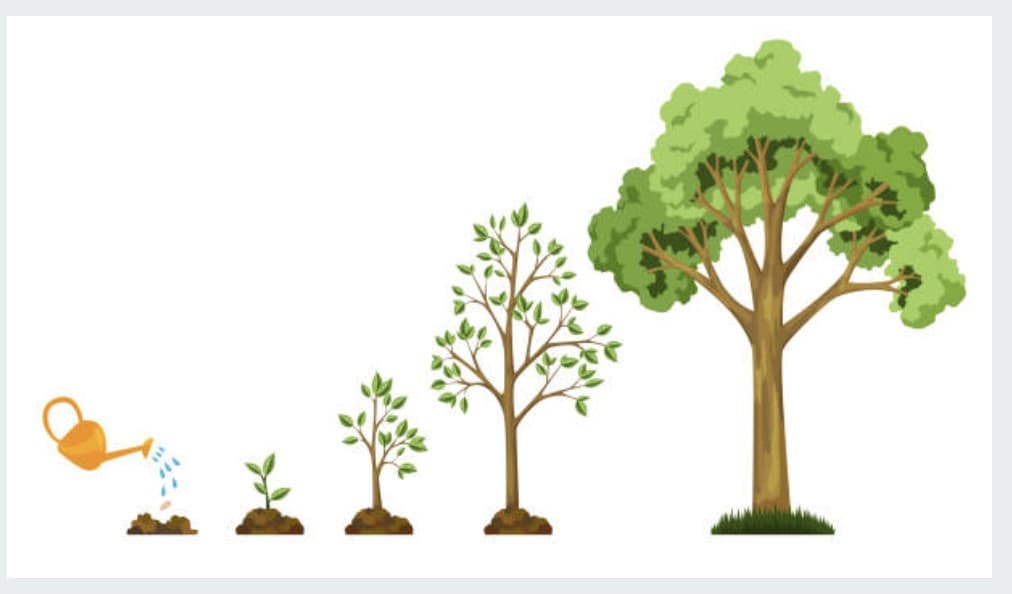
This is one of the broadest prompts.
It allows students to discuss an accomplishment, experience, or moment of realization that led to personal development or a new understanding of themselves or others.
The accomplishment does not need to come with a medal.
It could be learning to cook for the family.
Completing a difficult research project.
Organizing a small community event.
Teaching a younger sibling.
Finishing a first shift at a job.
The event could be:
Moving to a new school.
A conversation in the car.
A family celebration.
An unexpected conflict.
A disappointing performance.
The realization could be almost invisible to everyone except the student.
Perhaps the student realizes that leadership is not the same as being in charge.
Perhaps an argument reveals that listening is more difficult than speaking.
Perhaps caring for a family member changes the student’s understanding of responsibility.
This prompt is not asking for the applicant’s biggest achievement.
It is asking for a turning point.
The essay should show a meaningful difference between the student before and after the experience.
That difference does not need to be exaggerated.
Teenagers do not need to claim that one afternoon permanently changed every part of their lives.
A believable shift is enough.
A new habit.
A more mature question.
A changed relationship.
A willingness to act differently.
Small realizations can create large stories when the reflection is honest.
Prompt 6: Intellectual Curiosity

This prompt asks students to describe a subject, idea, or concept so engaging that they lose track of time while exploring it. Students must also explain why the interest is compelling and where they go to learn more.
This is not limited to school subjects.
A student might become absorbed in:
Urban planning.
Language development.
Baseball statistics.
Fashion history.
Public transportation maps.
Film editing.
Bird migration.
Behavioral economics.
Computer security.
The chemistry of baking.
The design of amusement parks.
The strongest intellectual-curiosity essays allow the reader to watch the student’s mind work.
What kinds of questions does the student ask?
What does the student notice that others overlook?
How does one question lead to another?
Does the student read books, conduct experiments, interview people, watch lectures, build models, join online communities, or create independent projects?
The essay should not merely state:
“I love biology because biology is fascinating.”
It should show the fascination.
Perhaps the student describes examining a leaf under a borrowed microscope.
Perhaps a broken video game leads to an interest in coding.
Perhaps an argument at the dinner table creates curiosity about public policy.
This prompt is especially effective when curiosity exists beyond the classroom.
The student does not need to be a future professor.
The student needs to be genuinely interested.
Real curiosity has energy.
It pulls the writer forward.
And when expressed well, it pulls the reader forward too.
Prompt 7: A Topic of the Student’s Choice
The final prompt permits students to submit an essay on nearly any subject. It can be based on another prompt, an essay written previously, or an original idea.
This option offers freedom.
It should not create panic.
Students do not need to invent an experimental structure simply because the prompt is open. A straightforward personal story can work perfectly well.
This prompt is useful when a strong essay does not fit naturally within the first six categories.
But students should not choose it simply to avoid making a decision.
The essay must still accomplish the same purpose.
It must reveal something meaningful.
It must provide information that is not already obvious elsewhere.
It must help the reader understand what matters to the student.
Common App’s guidance for the open-topic prompt encourages students to share what they genuinely want colleges to know rather than trying to predict what colleges want to hear. It also recommends asking whether the essay contributes new information or addresses something important that remains unsaid. (Common App)
Freedom is useful.
But freedom still needs direction.
How Should You Choose a Prompt?
Many students begin by studying the seven prompts and trying to decide which one looks easiest.
That approach often creates unnecessary pressure.
Begin with the story.
Choose the prompt afterward.
A meaningful experience may fit several prompts. A story about caring for a younger sibling could involve identity, challenge, gratitude, personal growth, or even a topic of the student’s choice.
The prompt is not the destination.
It is the frame.
The more important question is:
Which frame allows the story to reveal the clearest and most meaningful picture of you?
Do Not Choose Based on Popularity
During the 2025–2026 cycle, the open-topic prompt was the most frequently selected, followed by the adversity and personal-growth prompts. Intellectual curiosity, gratitude, and challenging an idea were chosen less often. (Common App)
That does not mean the popular prompts are better.
It does not mean the less popular prompts provide an admissions advantage.
Prompt choice is not a strategy game.
A college will not admit a student simply because the student selected a prompt used by fewer applicants.
Choose the prompt that helps the essay work.
Not the prompt that appears clever.
Use the “New Information” Test
Ask:
What will this essay teach the college that the rest of my application does not?
Suppose a student’s activities list already contains four robotics awards, a leadership title in the robotics club, and a summer engineering program.
Another essay explaining how much the student loves robotics may add very little.
However, an essay about repairing old radios with a grandparent could reveal patience, family connection, curiosity, and the origin of that interest.
The subject may still be technology.
But the information is new.
Use the “Change” Test

A strong personal essay usually contains movement.
Something shifts.
The student’s thinking changes.
A relationship changes.
A habit changes.
A question becomes more complicated.
The student does not need to become an entirely different person. But the reader should understand why this particular experience was worth telling.
Ask:
Who was I at the beginning?
What happened?
What did I understand by the end?
Use the “Scene” Test

Can the story be placed somewhere?
A classroom.
A grocery store.
A bus stop.
A laboratory.
A kitchen table.
A hospital waiting room.
A crowded gym.
Specific scenes help prevent the essay from becoming a collection of general statements.
Compare:
“I learned the importance of communication.”
With:
“For three weeks, I nodded through our group meetings without admitting that I did not understand the data.”
The first sentence gives the lesson.
The second gives the reader a story.
Use the “Voice” Test
Read the draft aloud.
Does it sound like the student?
Or does it sound like a corporate annual report?
Teenagers can write beautifully. They can be thoughtful, sophisticated, and serious.
But the essay should still sound human.
A student who never uses the word “multifaceted” should not suddenly describe a “multifaceted journey of transformative self-actualization.”
The goal is not to sound older.
The goal is to sound clear.
How to Choose the Right Common App Essay Topic
Choosing a prompt and choosing a topic are related, but they are not the same decision.
The prompt asks a category of question.
The topic provides the actual material.
Students often believe they need an extraordinary topic.
They search their lives for a national championship, a major tragedy, a successful company, a scientific breakthrough, or a life-changing international trip.
But the most memorable subject may be much smaller.
A weekly drive with a parent.
A mistake during a tutoring session.
A disagreement over a family recipe.
The first customer at a part-time job.
A younger sibling asking an uncomfortable question.
A garden that repeatedly refused to grow.
The event does not need to be famous.
It needs to be revealing.
Begin With Moments, Not Achievements

Create a list of moments from the last several years.
Not awards.
Not titles.
Moments.
Write down:
A time you were embarrassed.
A time you changed your mind.
A time you disappointed someone.
A time someone surprised you.
A responsibility no one at school knows you have.
A problem you tried to solve.
A place where you feel most like yourself.
A conversation you still remember.
A routine that matters to your family.
A question you cannot stop thinking about.
Do not judge the ideas immediately.
The purpose of brainstorming is not to select the essay in five minutes.
It is to uncover material.
Sometimes the strongest topic initially looks too ordinary.
That may be precisely why it works.
Write About Something You Actually Experienced
Authenticity is not an admissions trick.
It is the foundation of the essay.
Students should never invent a hardship, exaggerate an activity, borrow another person’s story, or present an experience they did not have.
A fabricated essay often becomes vague because the writer lacks genuine memory.
There are no awkward details.
No unexpected reactions.
No small mistakes.
No sensory information.
No emotional complexity.
Everything sounds polished because nothing was lived.
A genuine experience behaves differently on the page.
The student remembers what was said.
The student remembers what was misunderstood.
The student remembers the strange object on the desk, the noise in the hallway, the uncomfortable silence, or the thought that appeared at the wrong time.
Specificity is the footprint of memory.
Admissions readers evaluate the application as a whole. When an essay presents a personality, accomplishment, writing style, or life experience that feels disconnected from everything else, it can create questions about credibility.
The essay does not need to expose every private detail.
But what it says must be true.
Do Not Participate in the Trauma Competition
Some students believe suffering automatically produces a strong essay.
It does not.
A student should not disclose trauma simply because it appears dramatic. Deeply personal experiences can produce meaningful writing, but the student must feel emotionally ready to discuss them and comfortable sharing them with multiple institutions.
The reader does not need the most painful story.
The reader needs an honest and reflective one.
A student who has experienced hardship may choose to write about it. But the essay should be more than a description of pain. It should help the reader understand the student’s response, perspective, values, relationships, or growth.
Students who have not experienced a major tragedy should not go searching for one.
Ordinary life contains enough complexity.
Do Not Repeat the Activities List
The activities section records what the student did.
The essay should reveal what the experience meant.
An essay about debate should not spend 500 words describing tournaments and awards.
An essay about volunteering should not repeat hours, organizations, and leadership titles.
An essay about sports should not simply summarize a season.
Instead, choose one moment inside the activity.
The debate student may write about realizing that listening changed the quality of an argument.
The volunteer may write about an early mistake that changed how they approached service.
The athlete may write about sitting beside an injured teammate and discovering a different form of leadership.
The activity is the setting.
The student is the subject.
Be Careful When Writing About Another Person
Parents, grandparents, teachers, coaches, siblings, and friends can be important parts of an essay.
But they should not become the main applicant.
A beautifully written biography of a grandmother may tell the reader that the grandmother is resilient, generous, and wise.
The admissions committee is not considering the grandmother.
After every paragraph about another person, ask:
What does this reveal about the student?
How did the relationship shape the student?
What did the student notice?
How did the student respond?
What has the student carried forward?
The other person may light the match.
The essay must show what the student did with the flame.
What Topics Should Students Avoid?

There are few topics that are automatically unusable.
Almost any subject can work when handled thoughtfully.
However, several approaches commonly weaken essays.
The Résumé Essay
This essay moves from achievement to achievement.
It explains that the student worked hard, became a leader, earned awards, and learned perseverance.
It provides information.
But it rarely creates intimacy.
The Hero Essay
The student enters a community, solves a problem, helps everyone, and leaves as the hero.
This can unintentionally make other people appear helpless or reduce service to a performance.
A better essay recognizes complexity, mutual learning, mistakes, and the limits of the student’s role.
The Travel Changed Everything Essay
Travel can be meaningful.
But visiting a new place does not automatically create insight.
The essay must go beyond discovering that another culture is interesting or that the student should appreciate life at home.
What belief changed?
What uncomfortable assumption was exposed?
What continued after the trip ended?
The Sports Injury Essay
This topic is common but not forbidden.
The problem is not the injury.
The problem is predictability.
Injury.
Rehabilitation.
Hard work.
Return to competition.
Victory.
A more interesting version may explore losing an identity, learning to contribute without playing, resenting healthy teammates, or redefining competition.
The Perfect Conclusion
Real growth is rarely complete.
Students do not need to end every essay by claiming that they will never struggle again.
An honest ending may acknowledge that the student is still learning.
That is not weakness.
That is credibility.
Should You Get Your Common App Essay Reviewed?
Yes.
A Common App essay should normally be reviewed before submission.
But review and rewriting are not the same thing.
The best reviewer helps the student communicate more clearly.
The wrong reviewer replaces the student.
A strong review process protects ownership.
The ideas should belong to the student.
The experiences should belong to the student.
The language should sound like the student.
The final decisions should remain with the student.
Who Should Review the Essay?

A student might ask:
A college counselor.
An English teacher.
A trusted teacher from another subject.
A school counselor.
A mentor who knows the student well.
An experienced admissions professional.
A parent can also provide useful feedback, especially about whether a story feels accurate. However, parents should be careful not to transform the essay into the version of the student they wish colleges would see.
The most impressive-sounding essay is not always the most truthful one.
Limit the Number of Reviewers
Eight reviewers can create eight different essays.
One person wants a stronger opening.
Another wants more background.
Another dislikes the topic.
Another wants humor.
Another wants the student to discuss the intended major.
Another replaces simple words with complicated ones.
Eventually, the student no longer knows what the essay is about.
Two or three thoughtful reviewers are usually more useful than a committee.
Each reviewer should have a role.
One can examine the story and overall message.
One can focus on clarity and organization.
One can perform the final proofreading.
Ask Reviewers Specific Questions
Do not simply ask:
“Is this good?”
Ask:
What do you learn about me?
Where did you become most interested?
Where did you become confused?
Which section feels unnecessary?
Does the ending feel earned?
Does any sentence sound unlike me?
Is there enough reflection?
Am I repeating information from the rest of my application?
Specific questions produce useful feedback.
General questions produce personal preferences.
Review the Essay in Stages

The first review should focus on the story.
Is the topic meaningful?
Is the central message clear?
Does the essay reveal something important?
The second review should focus on structure.
Does the opening lead naturally into the story?
Are events presented in a clear order?
Is there a balance between action and reflection?
The third review should focus on language.
Are the sentences clear?
Are there unnecessary words?
Are transitions smooth?
The final review should focus on correctness.
Grammar.
Punctuation.
Spelling.
Names.
Formatting.
Word count.
Do not spend an hour polishing a sentence in a paragraph that may later be deleted.
Big decisions come first.
Commas come later.
What a Reviewer Should Never Do
A reviewer should not write the essay for the student.
A reviewer should not invent dialogue.
A reviewer should not add accomplishments.
A reviewer should not replace the student’s vocabulary with language the student would never use.
A reviewer should not insist that every essay mention the student’s intended major.
A reviewer should not force a dramatic lesson where none exists.
A reviewer should not turn a personal story into a marketing document.
Good feedback sounds like this:
“I want to understand more about what you thought at this moment.”
“This paragraph repeats an idea from the opening.”
“The ending feels different from the rest of your voice.”
“I understand what happened, but I do not yet understand why it mattered.”
Poor feedback sounds like this:
“Write that you developed a passion for interdisciplinary innovation.”
That may sound polished.
It may also sound like no seventeen-year-old on Earth.
The student’s natural voice does not need to be perfect.
It needs to be present.
How Do You Know When the Essay Is Finished?
No essay feels completely finished.
Eventually, revision begins producing different sentences rather than better ones.
That is usually the signal to stop.
Before submitting, the student should be able to answer yes to the following questions:
- Is the essay between 250 and 650 words?
- Does it respond naturally to one of the seven prompts?
- Does it focus on one central story, idea, or experience?
- Does it provide information not already obvious elsewhere?
- Does it include reflection rather than only description?
- Are the experiences and details truthful?
- Does the writing sound like the student?
- Has someone checked it for clarity?
- Has the final version been proofread?
- Would the student feel comfortable discussing the essay in an interview?
The essay does not need to explain everything.
It cannot.
Six hundred and fifty words will never contain an entire person.
The goal is to choose one window and clean the glass.
The Parent’s Role in the Common App Essay
Parents can be enormously helpful.
They remember stories students have forgotten.
They remember the child who dismantled alarm clocks, carried library books everywhere, organized neighborhood games, or refused to leave the science museum.
Parents can ask questions.
They can create time.
They can encourage an early start.
They can help the student locate memories.
But the parent should not take over the keyboard.
A parent often knows the student’s history.
The student must still decide what that history means.
There may be moments when the student rejects the topic the parent believes is perfect.
That is acceptable.
The essay belongs to the applicant.
Ownership is part of the process.
Students learn something by deciding which story represents them, which details matter, and which version of themselves they are ready to present.
The essay is not only a college requirement.
It is an exercise in self-definition.
The New Definition of a Successful Essay
Families sometimes ask:
What kind of essay gets a student admitted?
There is no single answer.
A wonderful essay cannot erase an application that is academically unprepared for a college.
A weak essay can make a student more difficult to understand.
A strong essay can add dimension, warmth, clarity, and humanity.
But it is not a magic key.
The best essay is not necessarily the funniest.
It is not necessarily the saddest.
It is not necessarily the most poetic.
It is the one that feels specific, reflective, and true.
It leaves the reader with the sense that a real person has been present on the page.
A student who notices things.
A student who has questions.
A student who makes mistakes.
A student who is still developing.
A student who will bring a particular way of thinking, participating, and relating to others into a college community.
That is the purpose.
Not perfection.
Recognition.
The admissions officer should reach the final sentence and feel that the transcript now has a voice.
That the activities now have a person behind them.
That the application is no longer merely a collection of numbers, courses, and accomplishments.
It is a student.
And for a few hundred words, the reader has had the opportunity to meet them.